Back to all News

Space Norway celebrates sustainability achievements with Eco-Lighthouse (Miljøfyrtårn) re-certification.

Telenor Satellite is re-certified for sustainability efforts by Eco-Lighthouse / Miljøfyrtårn.

Space Norway has been Eco-Lighthouse / Miljøfyrtårn certified since 2010 and recently, we have received our fourth re-certification.

A sustainable future needs real action

Sustainability and responsible business have been core values for Space Norway for many years within the company itself, as well as externally with its partners and suppliers. In 2010 the company became Eco-Lighthouse (Miljøfyrtårn) certified and is proud to have been re-certified for the fourth time, proving its commitment to a sustainable future.

A sustainable future needs real action and a concerted effort, and we take our share of the responsibility by taking concrete sustainability measures. As an Eco-Lighthouse, we also contribute to achieving several of the UN Sustainable Development Goals.

Space Norway decided to apply for Eco-Lighthouse (Miljøfyrtårn) certification back in 2010 when we were looking at our sustainability goals in general and joining the scheme was a tool we used to become compliant. Over the coming years, the scheme has become more recognised, resulting in the majority of companies we work with also becoming certified.

Eco-Lighthouse (Miljøfyrtårn) began in Norway and in 2014 was approved by the Government followed by, in 2017, approval from the EU. Companies must match a set of Environmental Management System (EMS) criteria to be approved and must go through a re-certification process every three years.

Awareness is key

Although a lot of significant sustainability improvements are reached through advancement in technology, Director Projects at Space Norway, Tone Liljeberg, explained how awareness is vital in driving forward the company’s sustainability goals, backed up by design improvements, internal strategies and processes.

“It is really important that all stakeholders are aware of what we are trying to do and have sustainability and the environment in their focus. This goes from internally with our own employees, to the suppliers we work with and their sub-contractors This is not something we can do alone. Being Eco-Lighthouse certified requires us to have an open dialog with vendors to ensure they are focusing on the environment, power consumption, recyclables and so on.”


Better efficiency with technology advancements

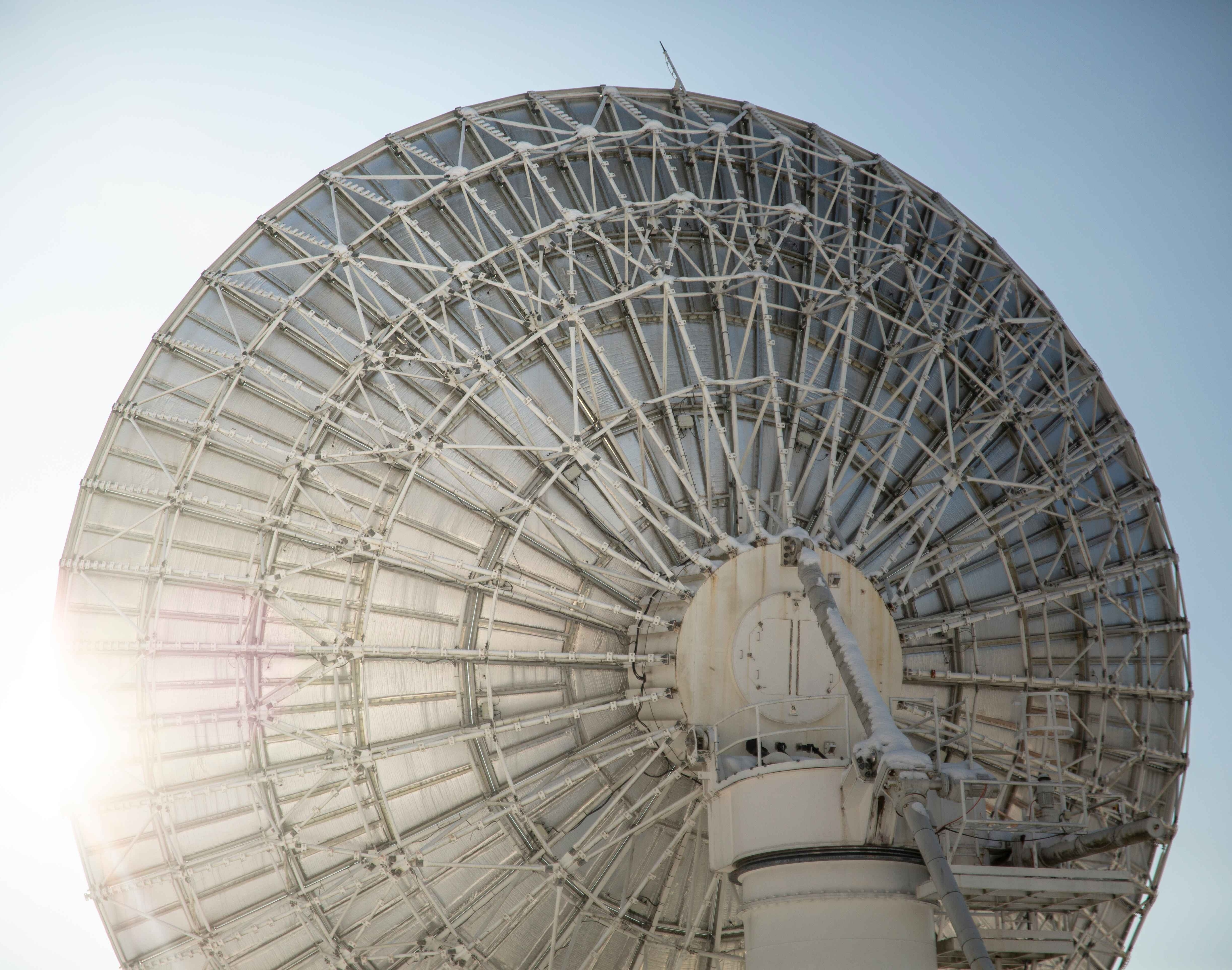
One major advancement in technology that has brought energy savings has been the introduction of surface panel heating on our antennas. The surface heating replaced the older style of hot air heating to act as a method of de-icing when it snowed. The new surface heating technology works similarly to a heating blanket and is more efficient as it is in direct contact with the back of the antenna. This new advancement initially resulted in a significant reduction of 1,500 watts/m2 down to 350 watts/m2, but a final reduction, which brought consumption down to 250 watts/m2, was led by ‘smart people thinking smarter’, said Ms. Liljeberg.

“Temperature sensors allow us to just heat the individual areas of the antenna which are snow covered. So, big changes in technology have led to the first major reduction, but by having this core value and focus on our minds, we have been able to ask ourselves, ‘can we do this smarter?’ And so, we have developed it further and seen more reductions.”

Image showing Nittedal antenna- Antenna Monica Monitoring and Control system
Ground antenna at the Nittedal Teleport.

Eco-friendly products and suppliers

Another measure we have put in place is increasing our use of ECO-certified suppliers and products we use for our canteen, cleaning and office supplies at Nittedal Teleport. In a review of the 30 largest suppliers to our Nittedal Teleport in 2021, a total of 71% were Eco-certified.


Impact of Covid

The Covid-19 pandemic of course saw a big reduction in our carbon footprint as it did for companies across the world. Telenor Satellite reported an all-time low for flights and general travel during the pandemic. Now that travel is opening up again, we are going to continue to carry out some meetings remotely and be selective over our travel needs.


Disposal of waste

Telenor Satellite ensures as much of its waste as possible is sorted and recycled, along with ensuring staff do not use single-use plastics in the office. The equipment we use is packaged in wood, so it can be recycled. In the canteen, everyone uses re-usable cups, cutlery and crockery. When suppliers attend the Nittedal site, we make sure they have containers close by for correct waste disposal.


We can all make a difference

While we are proud of the changes and reductions we have made to be more sustainable, improvements are always possible. Awareness is key for us and that is something we convey to all our stakeholders. We will not compromise on these values. The big changes will come with advancements in technology, but we can all work together to make the small changes significant.

Back to all News

Space Norway supports NTNU students in the building of world’s first selfie-taking satellite – SELFIESAT.

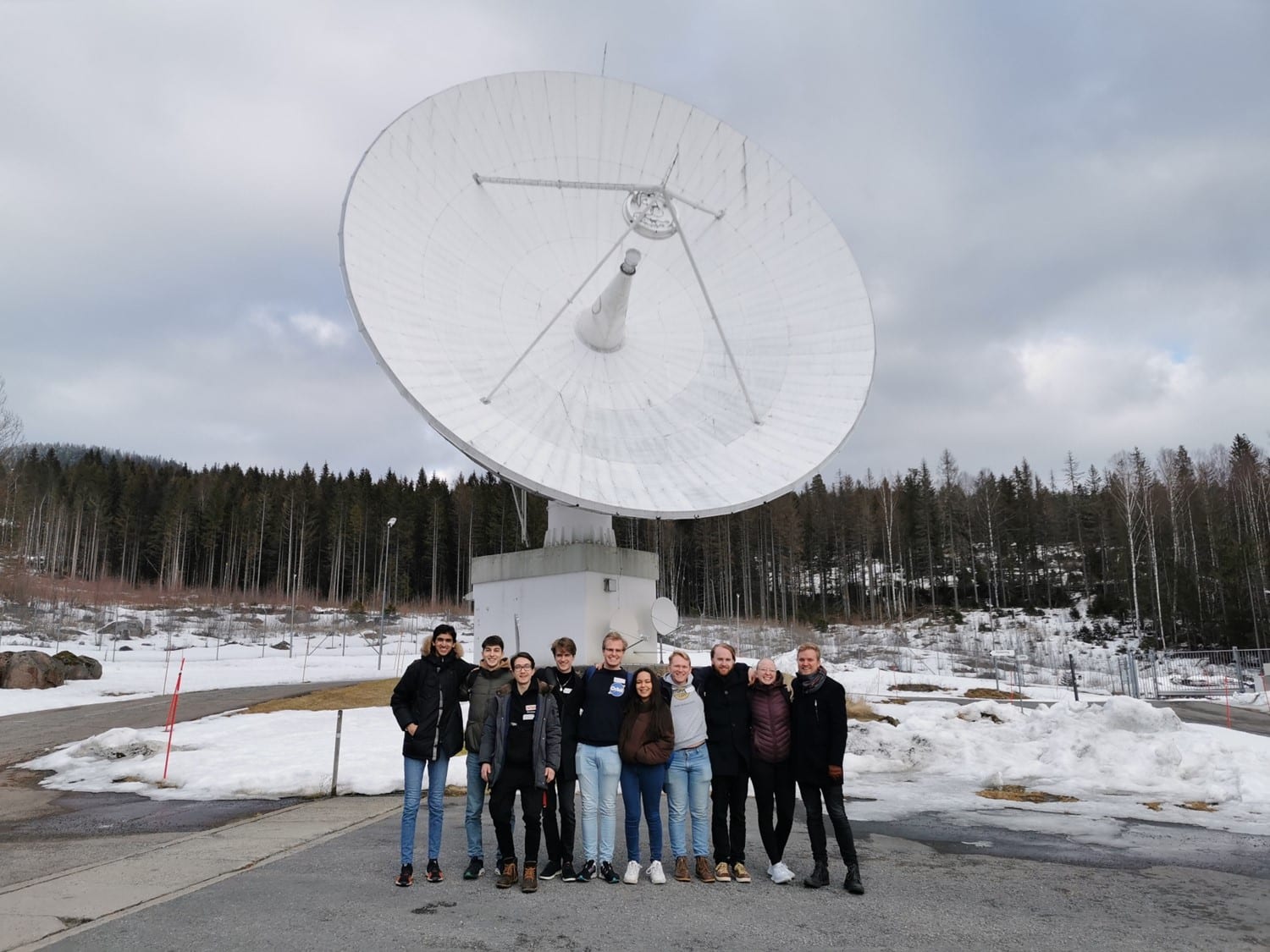
The picture demontrates ORBIT NTNU team that developed SELFIESAT
ORBIT NTNU team visiting Nittedal Teleport. From left: Soraj Singh Bisal, Mahdan Gazimagamaev, Nikolai Andresen, Jonas Krymski, Mathias Ådlandsvik Askeland, Lea Rose Nordhei, Magnus Mælhum, Jarle Steinberg, Mari Linnerud, Ulrik Falk-Petersen.

For Space Norway, ensuring the future of the satellite communications industry is a prime concern, and we are delighted to have played a part in an exciting project which has just come to fruition.

Passion for space

ORBIT NTNU is made up of a group of Norwegian University of Science and Technology (NTNU) students who have a passion for space and spend much of their free time pursuing that passion. With the backing of a number of space technology companies in Norway (including Space Norway), the group, made up of students from fields ranging from mechanical design and electronics to software engineering, management and marketing, has successfully built its first satellite using commercial parts developed for regular consumers and adapting them for space.

Satellite built around Raspberry Pi

Starting in 2018 as an ORBIT NTNU pilot project and using a Raspberry Pi as their payload computer, the students have succeeded in building a satellite which can operate in a low earth orbit (530-558 km) featuring five cameras and an external LCD screen onboard. The external LCD-display displays pictures sent in by the public and one of the cameras, mounted on a measuring tape arm, photographs the screen with the Earth in the background.

After several years of dedicated work by the ORBIT NTNU team, the satellite was ready for launch in March 2022. It was sent into orbit on a Falcon 9 as part of the Transporter 5 rideshare mission on 25 May 2022, launched by SpaceX from the Space Launch Complex 40 at Cape Canaveral, Florida.


Space Norway supports space engineers of the future

The relationship between NTNU and Space Norway began with a request from ORBIT NTNU to Space Norway’s Director of Satellite Operations, Richard Buckley, for their team to visit the company’s facilities so that they could understand how a satellite company operates. Unfortunately, it took a while to put a visit in place due to the severe restrictions placed on the satellite operations department by COVID. However, once the two teams had met it became clear that Space Norway could provide technical support.


A rewarding experience

Peter Elliott from the Satellite Operations team here at Space Norway has been providing technical support and advice to the students. “It has been enjoyable to be working with students who exhibit such enthusiasm for the space business”.

Space Norway has signed a three-year sponsorship agreement with ORBIT NTNU to provide both technical and financial support.


Looking to the future

Richard Buckley also sees other benefits going into the future, “Finding exceptional talent is always a challenge for companies, particularly in the field of technology, but we have come across many gifted young people through the course of the project, and we are keen to continue to support them and their peers as they learn more about space and the satellite industry.”

Back to all News

ASBM

Preparing to launch

A group of engineers and operators from Space Norway are currently visiting the British satellite operator Avanti in Goonhilly in Cornwall, to attend satellite operations courses. The team is strengthening their competence in satellite control and operations as a preparation for the upcoming launch of the ASBM (ASBM, Arctic Satellite Broadband Mission) satellites in 2024.

Satellite communications is understandably associated with strict security requirements and require highly dependable ground systems. The satellite operations control centre monitors the satellites 24/7. Telemetry is downloaded from the satellites and processed to ensure that all systems are operating per specification. The satellite operators work continuously in conjunction with the customers to qualify the mission requirements. The uniqueness of ASBM due to its highly elliptical choice of orbit as well as the close collaboration with its international partners Inmarsat, the Norwegian Armed Forces and the US Space Command, places significance on the development of a solid organization for satellite operations.

The Norwegian engineers are trained for a duration of two months at the British operator Avanti. Avanti was chosen for this assignment because it utilizes the same satellite operations software as Space Norway has implemented for ASBM. By participating in this training program, Space Norway ensures that its operations team holds solid competence in satellite operations prior to launching the satellites in the summer of 2024. Birger Johansen is leading the engineers from Space Norway and KSAT, and he believes they have benefited greatly from attending this training program in Goonhilly. – Our personnel collaborate very well with the satellite operators from Avanti. We have met persons with Avanti who hold a similar mindset as what we are used to from our organizations. There is a flat hierarchical structure in the company, and they share the same approach to problem-solving. The cultural similarities enable the training to be particularly efficient in readying our team for operating the satellites after launch, and contributes to significantly reducing the operational risk, states a satisfied Johansen.

The two Norwegian HEO-satellites shall be operational within one and a half year. They represent the first satellites from Western space industry to circulate the Earth in high-elliptical orbits across the two poles.

The ground stations have already been built in Tromsø and at Bardufoss and are ready to receive and process the information coming from the two satellites. Space Norway and KSAT are collaborating closely to prepare a round-the-clock, 24/7 organization for operating the ground stations once the satellites are operational in orbit.

Back to all News

ASBM ground stations

An important test

Viktig test av bakkestasjoner i ASBM-programmet

The HEOSAT-project has reached a key milestone and began end-to-end testing of the ground segment (for the satellite system) during the second half of June.

In the summer of 2024 two large satellites will be launched into a highly-elliptical orbit going across the north pole. ASBM (Arctic Satellite Broadband Mission) is Space Norway’s major initiative to pioneer providing broadband communication to the Arctic region.

During the construction of the two satellites there is a major test program implemented to ensure that all the equipment onboard is built to sustain the extreme conditions offered in a space environment and experienced during a launch. The testing involves exposing the individual satellite components to temperatures, radiation levels and vibration levels equivalent of those experienced during launch and in space.

During the construction of the two satellites there is a major test program implemented to ensure that all the equipment onboard is built to sustain the extreme conditions offered in a space environment and experienced during a launch. The testing involves exposing the individual satellite components to temperatures, radiation levels and vibration levels equivalent of those experienced during launch and in space.

The purpose of the ongoing end-to-end testing of the ground segment is to secure that the ground stations are properly connected with the customers such that all communication and exchange of data, for example ephemeris, telemetry and commands, are transferred according to plan.

The two-week long test campaign involves teams of personnel from Space Norway, the satellite provider Northrop Grumman and the ground segment provider KSAT. The customers are also an active part of the test campaign, and representatives of the Norwegian and US Armed Forces as well as Inmarsat are standby to confirm data reception at their respective ends, as well as ready to report any possible deviations from specification. In this respect, the end-to-end test campaign serves as a first full-scale test of the supply chain from the satellite operations control center to the customers.

Back to all News

ASBM

Practice makes perfect

Maintaining a stable operation as well as security are the most important features for most IT systems, and nowhere is this as important as it is in space. If a problem occurs, obviously there is no one to send. Consequently, all software and all physical parts of a satellite are thoroughly tested and retested before launch.

As a part of the delivery from satellite builder Northrop Grumman, a test environment is established on the ground where a simulator is a critical component. This satellite simulator is a digital copy of the ASBM satellites, and it is used for testing the ground stations before the actual satellites are launched into their highly elliptical orbit. The simulator is used to train the satellite engineers and operators for a range of different scenarios and all these practices are constantly evaluated.

The satellite simulator and the test environment have been through an acceptance test in Norway and is a part of the satellite operations center. The simulator enables efficient and secure testing and evaluation of every single procedure within each sub system on each satellite, such as propulsion, power, temperature management and handeling of payloads, data and TT&C (Telemetry, tracking and command).

The ASBM programme sent all its engineers and satellite operators to the British satellite operator Avanti for several months during 2022. Now, the staff spends more time in the simulator to be as prepared as possible when the satellites are sent into orbit over the poles. Once the programme enters the operational phase, the simulator will be used to test planned maneuvers before transmitting them to the satellites and for the operators to practice different scenarios.


Date June 8th 2022

Back to all News

Press release

EPS-R payload delivered and begins integration into the ASBM host vehicle

EL SEGUNDO, Calif. — Space Systems Command (SSC) delivered the first of two Enhanced Polar Systems-Recapitalization (EPS-R) payloads to begin integration on Space Norway’s Arctic Satellite Broadband Mission host space vehicles. The second payload is expected to be delivered for integration onto the second host space vehicle by the end of July 2022. SSC’s joint partnership with Norway is allowing the hosted payload to deliver capabilities three years ahead of schedule with potential savings of up to $900 million. A successful integration and testing process will highlight the effectiveness of the U.S. Space Force, Norway’s Ministry of Defense, and Space Norway’s strategic partnership.


Read the rest of the press release here.


Satellite operators are venturing into the Arctic to improve connectivity as the changing atmospheric and geopolitical climate drives demand for more bandwidth in one of Earth’s last remaining frontiers.

Satellite operators are venturing into the Arctic to improve connectivity as the changing atmospheric and geopolitical climate drives demand for more bandwidth in one of Earth’s last remaining frontiers.

This is a Space News article written by Jason Rainbow, May 13th 2022.

Fledgling and established operators alike see a growing market for capacity in areas best served by satellites in non-geostationary orbit (NGSO).

OneWeb and SpaceX’s Starlink, the world’s largest broadband megaconstellations in low Earth orbit (LEO), already have polar-orbiting satellites in their expanding fleets.

SES is looking at using inclined planes to cover the Arctic with O3b mPower, its next-generation medium Earth orbit network that aims to start deploying satellites this year.

The Arctic Satellite Broadband Mission (ASBM) — a joint venture between British satellite operator Inmarsat, the Norwegian Ministry of Defense and the U.S. Air Force — plans to deploy two satellites in highly elliptical orbits on a SpaceX Falcon 9 in 2023 for polar coverage.

Russian Satellite Communications Co. (RSCC) has outlined plans to add four satellites in highly elliptical orbits to its fleet in the following years to extend coverage deep into the Arctic Circle.

Read the complete article.

Back to all News

New technology from IDEAS and Space Norway

Keeps EU satellites safe

In a few years, the EU launches its next generation Galileo navigation satellites, the ones that give us positioning data, for gadgets such as mobile phones and watches. Together, Space Norway and IDEAS facilitate radiation data that will help the EU in planning the Galileo launch.

After detachment from the space rocket, it will take the Galileo satellites several months to reach their designated orbit, and during this period, they are exposed to severe radiation. The phase of finding its correct orbital path is called orbit raising, and for those who launch the satellites it is important to protect them as much as possible during this period. Space Norway is building two large satellites which will move in a highly elliptical orbit (HEO) in order to provide mobile broadband communication to the Arctic. For each orbit made, the satellites pass through the same altitudes as the Galileo satellites pass through during their orbit raising. With data from Space Norway’s satellites, the EU will have more accurate information about this radiation, and thus be able to better protect their future navigation satellites.

Space Norway and IDEAS cooperate in including a radiation monitor on one of the HEO satellites, and together they have made an agreement with the EU Commission on delivery of radiation data. With IDEAS’ monitor on board Space Norway’s satellite, Norwegian companies contribute to both national and European space targets and efforts. IDEAS is a Norwegian high-tech company with special competence within radiation, and with the support of the Norwegian Space Agency they have built a radiation monitor for mapping space radiation.

The monitor will deliver valuable radiation information from the unusual highly elliptical orbit, and from the Norwegian point of view, it is a considerable contribution to future space projects in the EU – especially to the EU navigation program. Based on traditionally important research within space weather and solar radiation, Norway demonstrates an important contribution to the EU space ambitions.

This cooperation is in line with the ambition of the new Norwegian space strategy of establishing robust space infrastructure supporting national security needs.

Back to all News

Press release

Redundancy on primary telecom connection to Svalbard restored

Space Norway AS owns the fibre optic cable between Svalbard and mainland Norway. The cable is a key element of Norway’s infrastructure in the Arctic and provides broadband telecom services both to the civil society and the science and space activities at Svalbard. Since Friday, January 7th, 2022, the system has been operating without the full specified redundancy. As of January 18th, 2022, this redundancy is restored.

The Svalbard fibre system is built as a fully redundant solution with two cables separated approximately 5-10 km on the seabed. The redundancy ensures continued operations if one of the two connections fails to function. At 04:10 CET on Friday, January 7th, 2022, one of the two connections experienced a failure. This failure did not in any way change the ability to communicate effectively with Svalbard in the same manner as before, but it represented a temporary lack of redundancy.

The analysis of the failure indicated a shunt failure in the cable causing loss of power to some of the signal repeaters. Through a workaround applying an alternate power supply to the damaged cable, the redundancy was restored during the evening of January 18th, 2022. This minimizes the operating risk until final cable repair can be performed probably in the February 2022 timeframe, depending on the availability of the cable vessel and the necessary weather conditions.

POC at Space Norway: Dag H Stølan, Head of Infrastructure, +4740029601/ dhs@spacenorway.no

Back to all News

ASBM

Space Norway to provide satellite-based Arctic broadband

Space Norway will cooperate with the satellite operator Inmarsat and the Norwegian Ministry of Defence to offer mobile broadband coverage to civilian and military users in the Arctic. Two satellites will be built by Northrop Grumman and are scheduled to be launched by SpaceX in late 2022. The ground station will be established in North Norway and ensure Norwegian control of this critically important capability.

“This will be a milestone for people in the Arctic who have very limited or no broadband access in the region,” says Jostein Rønneberg, Space Norway ́s CEO.“We are building a robust communications capability in an area strategically important to Norway and our partners. This will be vital for surveillance, fishery control and rescue operations in the vast sea area that is under Norwegian control, and will significantly improve our ability to operate in the High North”.

Space Norway, a limited liability company, owned by the Norwegian government, has established a new subsidiary company, Space Norway HEOSAT AS, to manage the program and operate the two satellites together with Kongsberg Satellites Services in Tromsø, Norway. The program is fully financed with customer agreements in place for the service life of the satellites.

“After a multi-year dedicated effort, we are both proud and happy to have closed customer agreements with Inmarsat and with the Norwegian and US militaries”, says Program Director Kjell-Ove Skare. “This is an exciting collaborative effort, which ensures a cost-effective solution for all parties. Now we are eager to start the real work of building the satellites and the ground stations. We look forward to providing the world’s first and only mobile broadband service in the Arctic region, something which has long been an important objective for the Norwegian authorities.”

Both satellites will be launched in late 2022 on a SpaceX Falcon 9 rocket into a Highly Elliptical Orbit (HEO), which will provide full coverage from 65 degrees North, which in practical terms is the area North of the Arctic Circle. Each of the two satellites will carry multiple payloads, and the system is scheduled to be operational for at least 15 years, with users able to switch between current geostationary satellites and the HEO satellites. Each satellite will have a mass of 2000 kg and provide six-watt power through their sun arrays.