Back to all News

Changes in management

Dag H. Stølan appointed new CEO

Dag H. Stølan is appointed to the position of CEO of Space Norway AS. He comes from the position of Director of Infrastructure and CSO in Space Norway.

Before joining Space Norway in 2017, Stølan had a long-standing career in the Norwegian Armed Forces, the last position as Major General and Head of procurement at Norwegian Defense Materiel Agency.

Dag H. Stølan succeeds Jostein Rønneberg, who has been leading the company since 2013. The company develops and maintains critical space related infrastructure, and consists of the parent company Space Norway AS and the two subsidiaries Statsat AS and Space Norway HEOSAT AS, as well as the jointly owned Kongsberg Satellite Services AS.

Stølan has deep insight in the company’s activities and is well suited to continue the work Rønneberg has started. He has a long experience in leading organizations with large and complex projects as well as a good understanding of public administration and processes. His background gives him an excellent understanding of the need for critical space services, including the strategic importance of space for its most demanding users.

Chairman of the Board, Svein Olav Munkeby says: “Stølan has been deeply involved in company decisions and has acted as deputy for the CEO. This implies excellent knowledge and oversight of strategy and ongoing activities and future projects. The Board is very content with his appointment and feel that he will bring continuity as well as deliver on our ongoing projects. At the same time, he has the qualifications needed to bring Space Norway into the next phase of its development. All this is important for the Board. I would like to thank Jostein Rønneberg for the exceptional work he has put down in developing Space Norway into a leading satellite company with an order backlog reaching NOK 9 B”.

CEO Jostein Rønneberg, says: “On behalf of the company, I am content with the Board’s decision. Stølan has all the qualifications needed to succeed in taking the company into the future. Space Norway is an important company for Norway, and I wish him good luck”.

“Jostein Rønneberg has brought this company to its solid position and an excellent platform for further growth. I am looking forward to continuing and building on Rønneberg’s work. It is a privilege to be allowed working with the dedicated and highly competent workforce here at Space Norway,” says Dag H. Stølan.

Stølan will take office in June.

Back to all News

Long distance security

Taking strict security measures in space project

Security measures for a satellite operation means assessing everything from physical risk at a ground station to cyber attacks in space and space debris. The operation must be aligned with the current security threats. Simple, but very complicated.

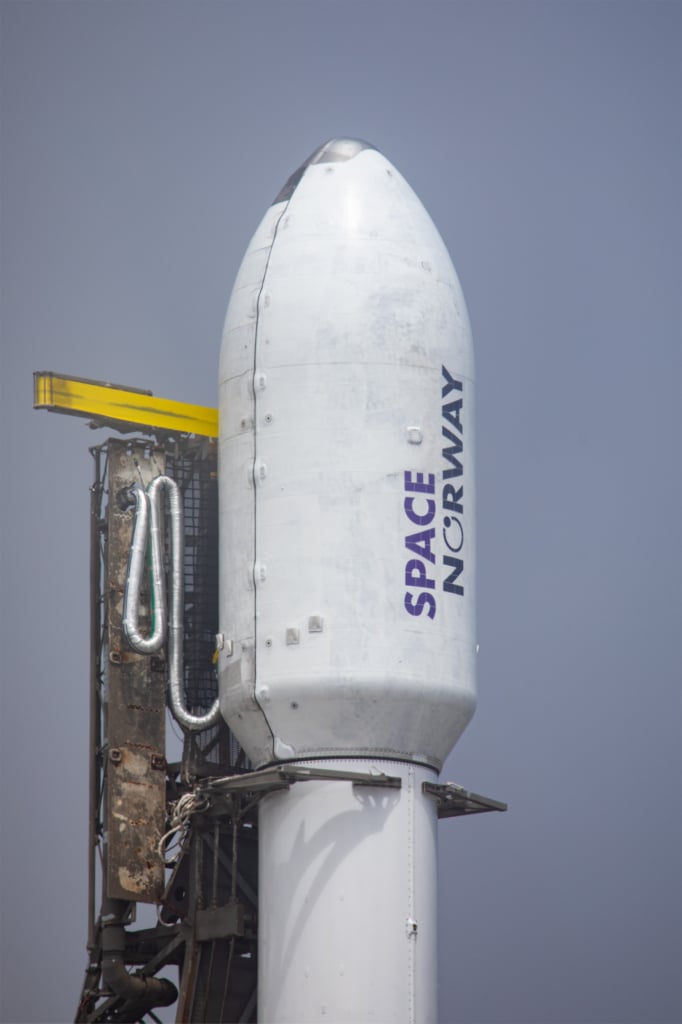
Any Norwegian space project is international in its execution. We have world class competence, but we are a small player in the space industry. In 2024, Space Norway launches two highly elliptical satellites that will provide broadband to the Arctic. The two satellites in the ASBM programme (Arctic Satellite Broadband Mission) are being built in the US and will cover and transmit to American soil. We interact with both suppliers and customers here (read this article on Landing Rights in the US) in addition to our Norwegian and British customers.

Security is especially important when the operation takes place in space and on the ground at the same time, and it is equally important to cooperate well with customers and suppliers on security matters. The measures we must take into consideration span from physical and digital protection of the ground stations to operating the satellites in a secure fashion and to the protection of software and systems on board the satellites. Obviously, there is a whole range of different risks that can occur in such a wide scope. A satellite will not be exposed to the same physical threats as the ground stations, such as flooding for example, but the operation as an entity must consider everything that can happen on the ground and in space at the same time. Security is seen in three dimensions: Confidentiality protects the values; integrity protects information and makes sure it does what it is supposed to do and finally availability provides what you want when you want it.

So how does one cover such an elaborate and important issue, with so many variables and with customers and suppliers from different countries with different rules and demands? A common set of rules and standards is a good beginning.

To cover all these considerations as simply as possible in cooperation with our partners, Space Norway uses the American NIST as a framework. NIST (The National Institute of Standards and Technology) offers framework and guidelines using open standards and suggestions for measures to secure operations and information through developing policies and procedures tailor made for our needs. This institute does not have power of enforcement nor powers of revision, but it offers a wide range of security standards, from the smallest nano particle tool to global communication networks. They offer principles for procedures and detailed suggestions for the whole process.

Space Norway’s security team works with specialized consultants in implementing these procedures for our ASBM operation. To us, it is essential to be credible towards our national and international customers, and NIST is an important common basis for our security efforts.

Back to all News

Space Norway's US Field Office

Managing the ASBM project from abroad

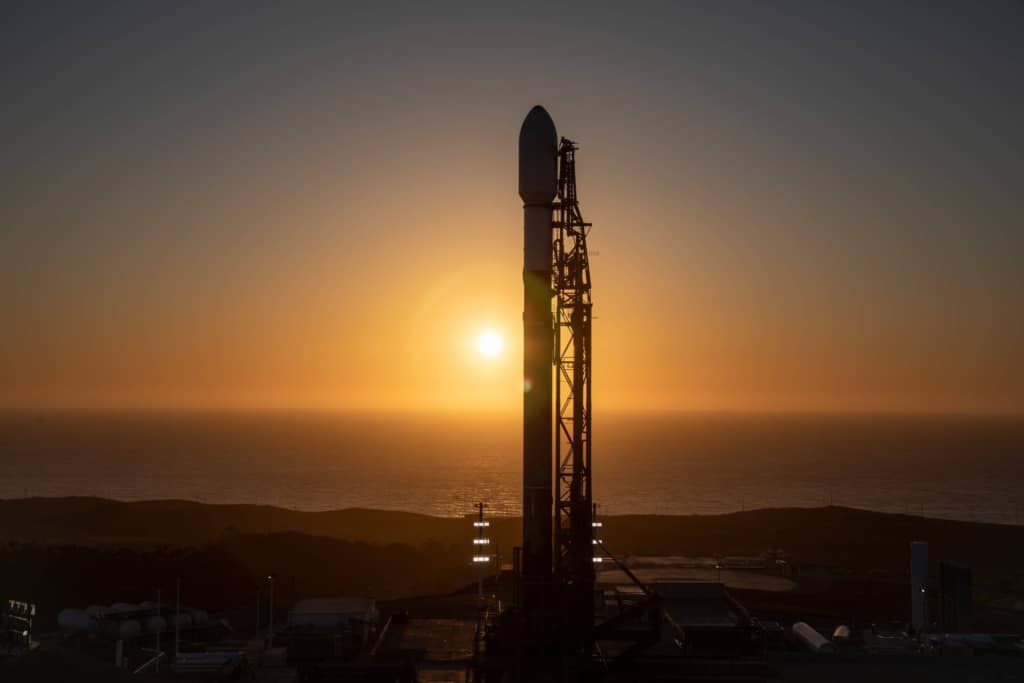
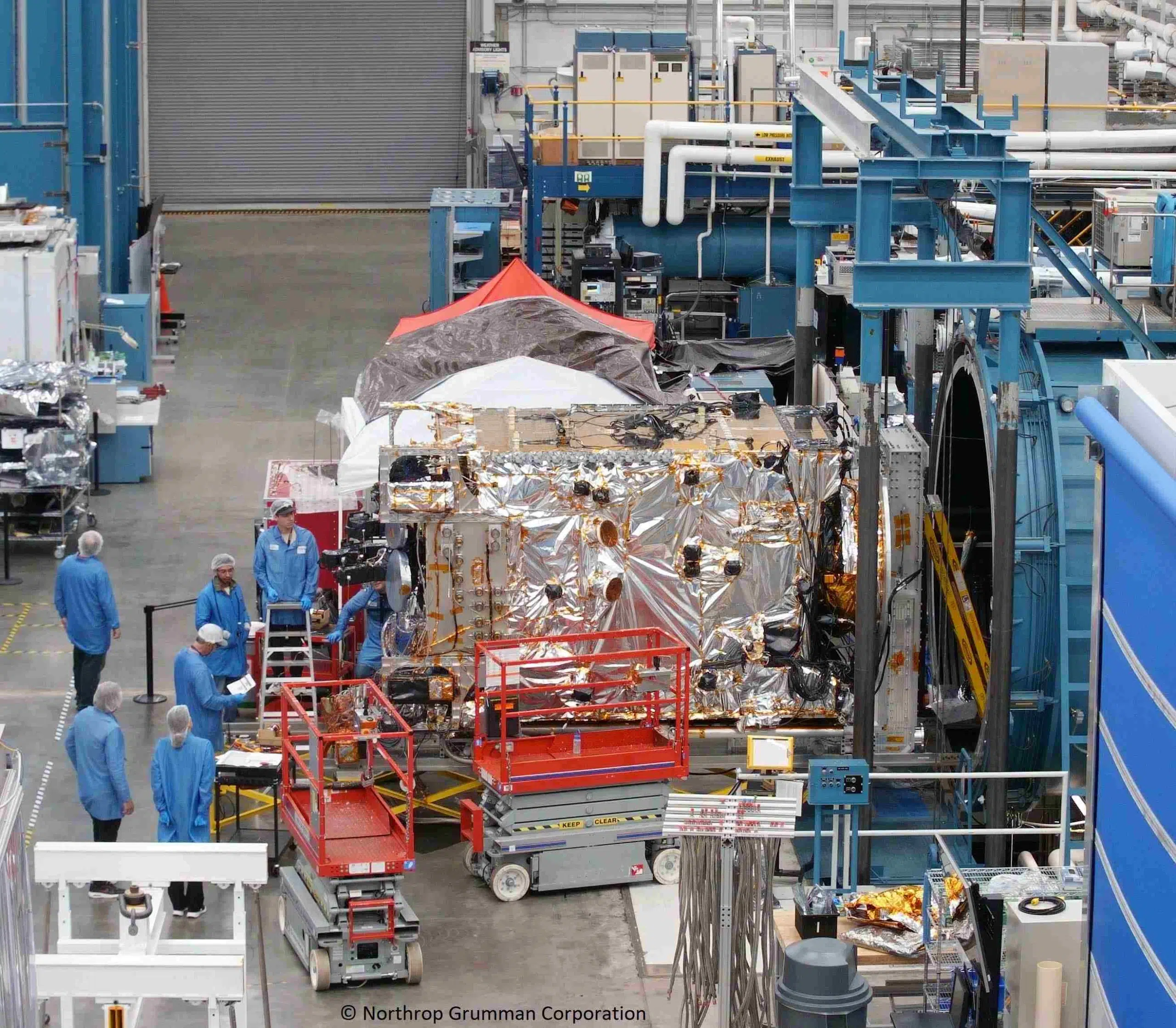
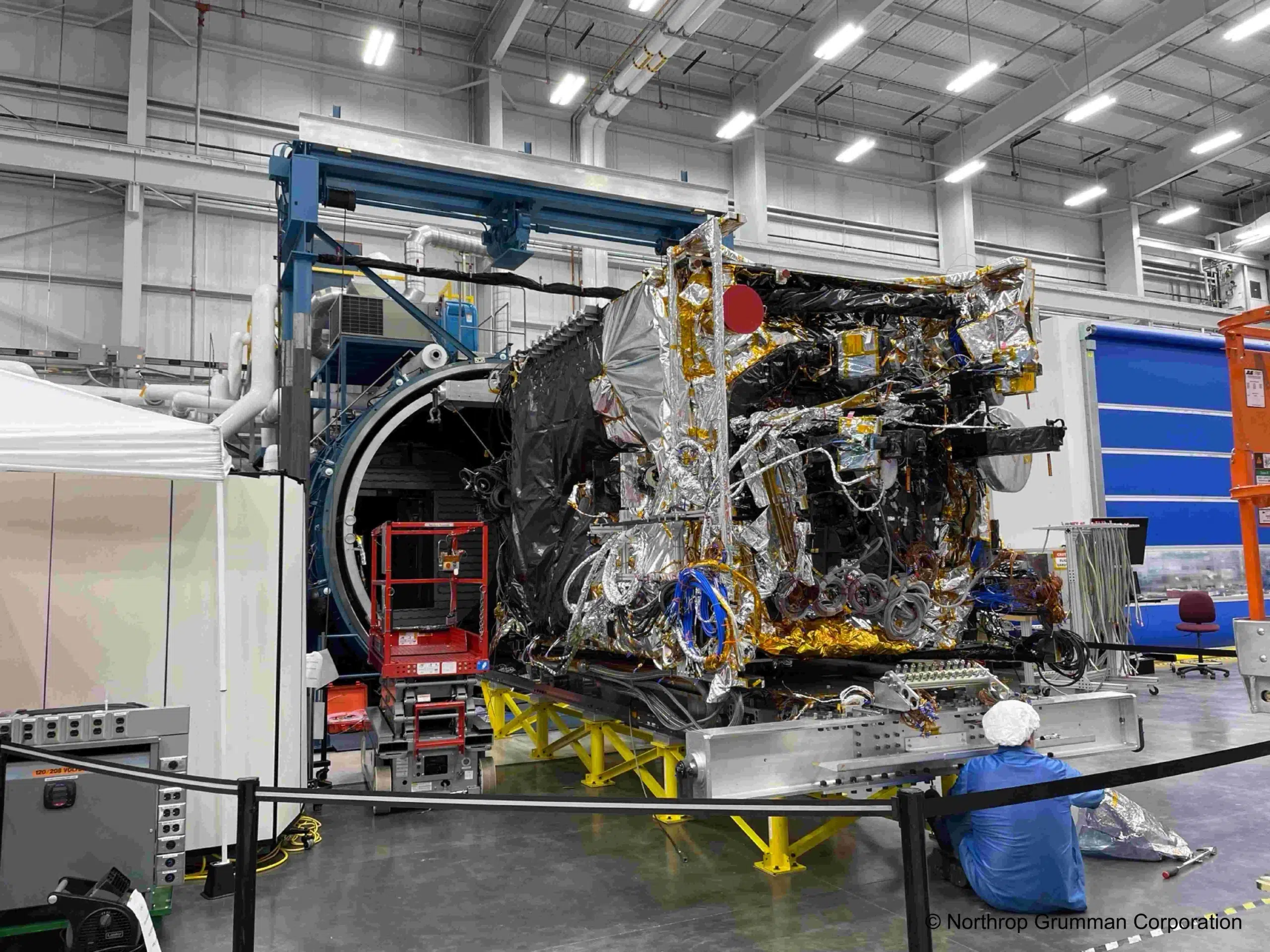
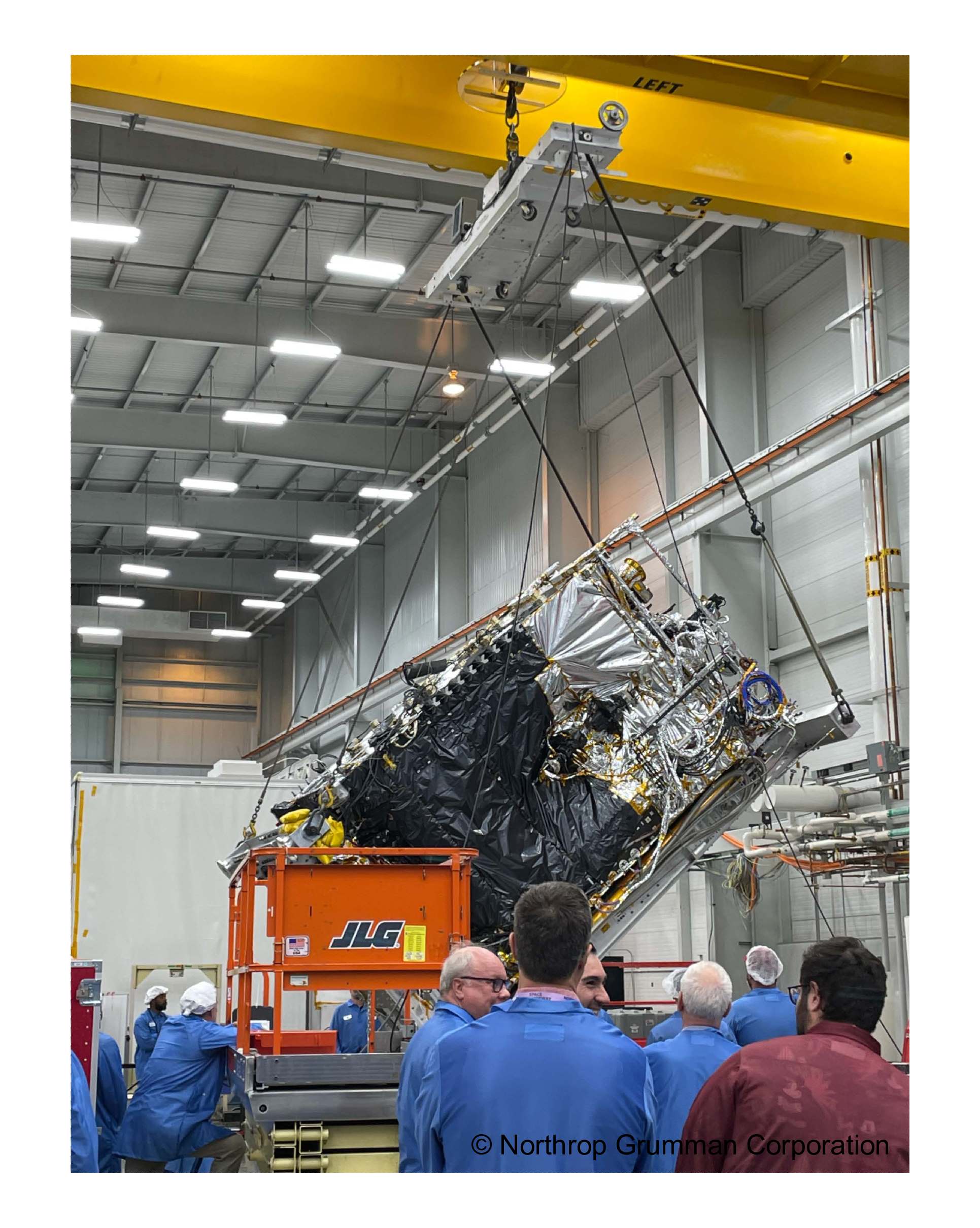
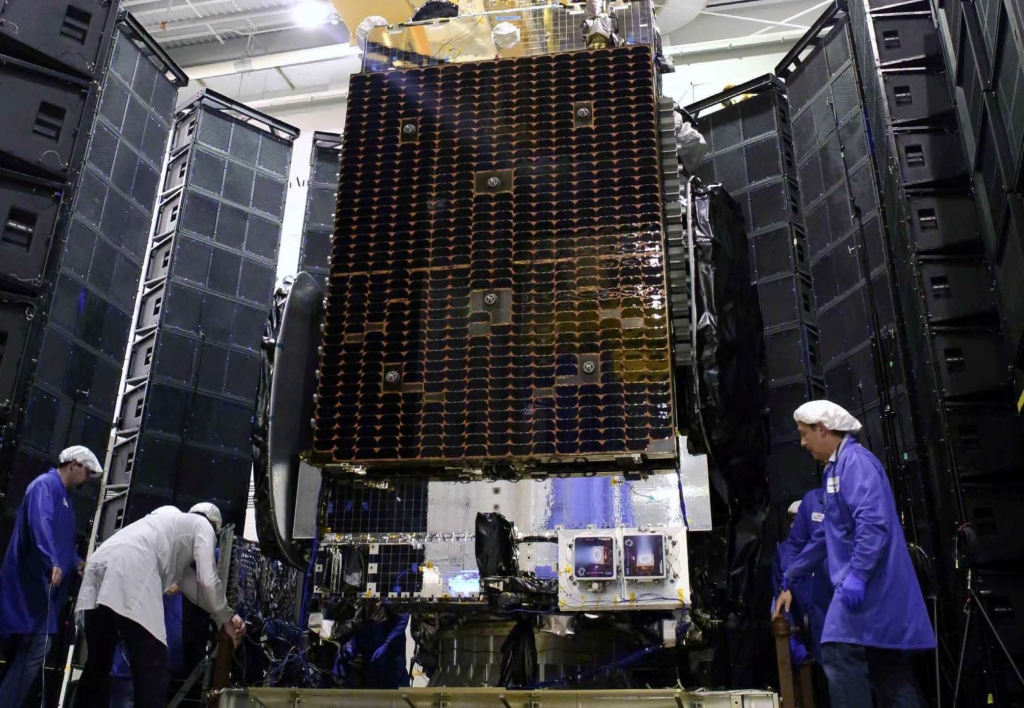
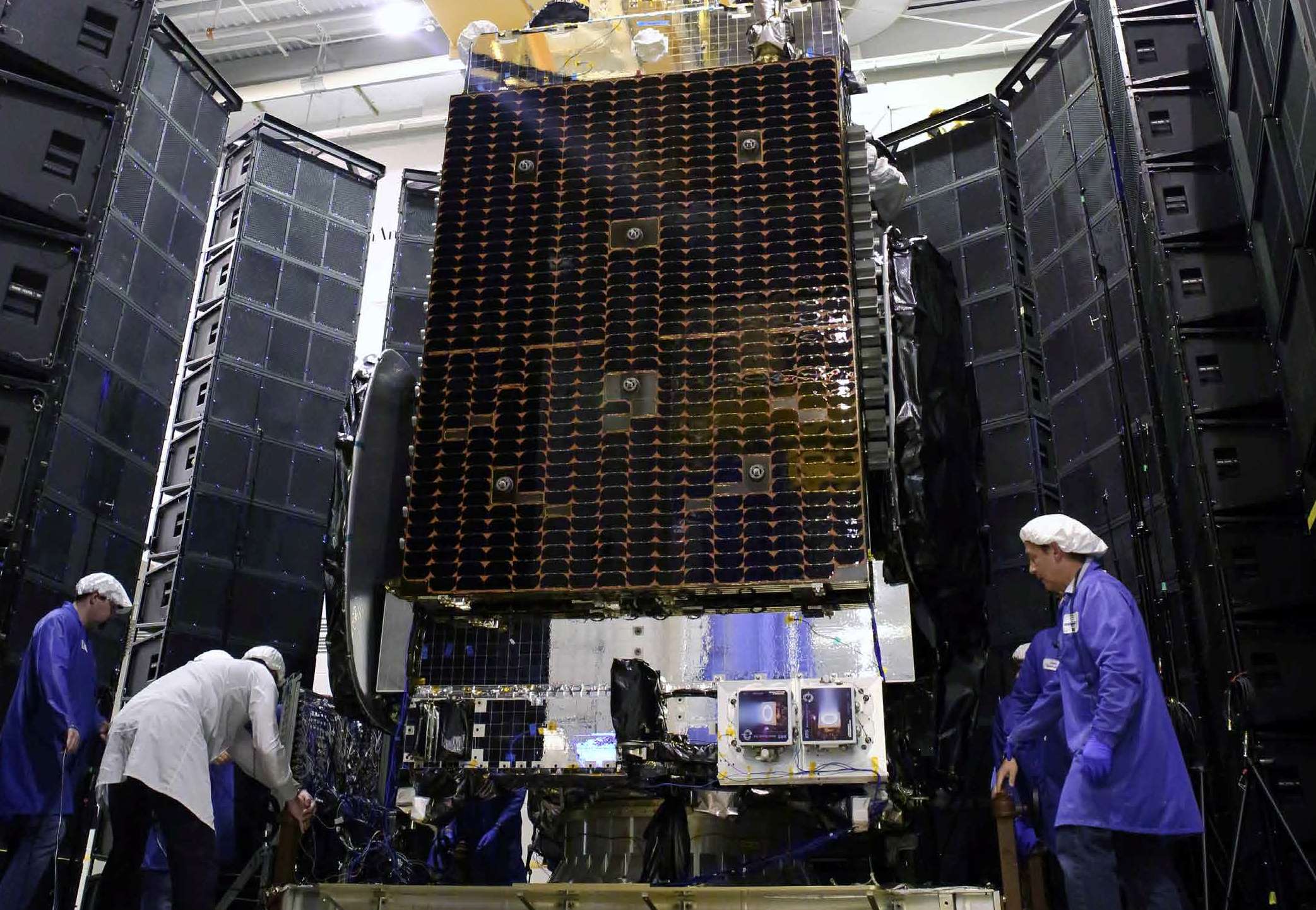
Space Norway’s two highly elliptical satellites launch from Vandenberg, California. They are being built by Northrop Grumman (NG), also located in the US. The Arctic Broadband Satellite Mission (ASBM) programme has hired a team in the US to monitor the process leading up to launch.

Oddveig Tretterud is the project manager for the ASBM programme, responsible for the Space project and keeping an eye on the building of the satellite and the launch. Oddveig travelled to Dulles in Washington DC in 2020, where NG has its headquarters to put together our Field Office. She has extensive experience in building satellites along with having worked several years in the US before. She knows the business and she knows which skills are needed to manage the complicated business of building satellites.

The satellites Space Norway has bought from NG are by no means mass produced, they are very complex. Overseeing the building of this very logistically challenging operation requests technically demanding practical work. Decisions must be made quickly, and someone needs to be present at the supplier’s location every day. These processes never run smoothly, assessments and choices must be made continuously making client presence a necessity to ensure the best possible product delivery. In addition to Oddveig, her team consists of highly experienced consultants with detailed knowledge of the different disciplines of a satellite project. Her team is comprised by Jim, Roland and Chris, three engineers with decades of experience from similar programmes for Telesat, a large Canadian satellite company. Additionally, working together with our team are two people from our client Inmarsat and one person from the US Space Force.

The daily routine involves meetings with the supplier, first during the design phase dominated by analysis and assessments towards the program specifications. Once the design is approved, extensive testing on each component commences at the production site before delivery at NG for integration on the satellite platform. There, testing at system level starts. The process of testing is considerable, and all test results are discussed and assessed. If a test fails for some reason, detailed processes to identify, repair and recreate the failure are instigated. Agreement on why the failure happened and consensus that all measures are taken to ensure that it will not happen again, are needed before further testing can continue. The Field Office is involved in all these stages, all the while reporting back home on status, progress, areas of risk and measures. The team additionally coordinates communication between NG and the rocket supplier, SpaceX.

Our Field Office tracks the process from the design phase, through building and testing. When the building is complete and the satellites are ready, they are transported to the launch site. After launch, the test regimen continues in orbit. And then, finally, control of the satellites is transferred to satellite operations and the job is done for our Field Office.

Back to all News

US Space Force

Delivers final payload

The Arctic Satellite Broadband Mission is scheduled to launch in 2023 on a SpaceX Falcon 9 rocket from Vandenberg Space Force Base.

WASHINGTON — The U.S. Space Force announced Nov. 28 it delivered the second and final military communications payloads that will launch in 2023 on Space Norway’s Arctic Satellite Broadband Mission known as ASBM.

The first Enhanced Polar System Recapitalization (EPS-R) payload was delivered in June. Both payloads are scheduled to launch to highly elliptical orbits on a SpaceX Falcon 9 rocket from Vandenberg Space Force Base.

Read the whole Space News- article written by Sandra Erwin here

Back to all News

Q&A with Broadband TV News on the latest developments and future trends in the satellite broadcasting industry.

Ole Ledang, Director Broadcasting Division, Telenor Satellite
Ole Ledang, Director Broadcasting Division, Telenor Satellite. Photo: Kilian Munch

BroadbandTV News speaks with Telenor Satellite’s Ole Ledang about current advances in the broadcast industry, looking at trends in satellite design and essential requirements for continuous success in delivering premium DTH services across Europe.

Telenor Satellite has been described as the most versatile satellite operator in Europe. How have you achieved this position?

It’s a bald statement, but as a small/medium satellite operator you must think very carefully about satellite design. With THOR 5, 6 and 7 we have fully utilized the accessible frequency spectrum licensed at 1°West, including a Ka-band payload on THOR 7 alongside our FSS and BSS transponders.

Our key markets for broadcasting are in CEE and the Nordics and some broadcasters and DTH players would like coverage over a larger part of Europe to reach CATV headends, expats and other markets. We have multiple areas of focus when designing our satellites – option to switch transponders between spotbeams in case market development takes a U-turn, and 1°West spare-transponder philosophy on every satellite in order to perform damage limitation should a satellite crash and burn. Is it desirable to be able to move spot-beams? Could a situation arise where we have to uplink from one beam and downlink in another? Uplink in Ku-band and downlink in Ka-band, or vice versa?

So, when your flexibility is not on a multi satellite, multi orbital position level, you have to include flexibility and versatility on every satellite – and between the satellites. I think we have maximized the design every time, and it has proven necessary and right to do so.

As a satellite operator, how do you use ground infrastructure technology to enable operation for the DTH pay-TV sector?

Key for our customers is quality – both operational and visible – and quick response to changes. To fulfil the quality aspect, we have recently focused on converting all feeds from play-outs and studios to Mezzanine format. We have full control of the encoding and transcoding quality at our Nittedal Teleport and, together with our customers, we test and tune the setup until they are satisfied with the end result.

The IP network at Nittedal Teleport enables us to easily add transcoding resources if a channel is being prepared for ABR and IPTV production. We can also add broadcasting channels from remote operated video-servers hosted at Nittedal Teleport, or add sources made available through Zixi, SRTor other internet solutions.
A modern infrastructure mixed with IT competence and broadcasting know-how enables us to move fast and adapt to customer demands.

I should also mention that for the last couple of years our focus has very much been on IT-security. How to best protect production and control-systems from harmful intrusion.

Telenor Satellite’s largest Teleport is in Nittedal just north of Oslo. Can you describe how it operates?

Nittedal Teleport is the heart of our operations. Just shy of 60 engineers are organized in specialist-groups including a 24/7/365 NOC (Network Operation Centre) as well as Broadcasting Services, Data Services, RF and Infrastructure, and an ever more present and important IT and Network group. These engineer groups function as support for our NOC and as sparring partners for our customers.

What in your view are the latest developments in satellite design?

Never has the industry seen more alternative design initiatives as in the past 3-5 years. For broadcasting, I would like to see satellite- and launcher-development adapted to the changes in the DTH and broadcasting markets. Shorter contracts, rapid change to channel profiles, dedicated channels for live events such as football leagues, new geographical territories. Everything should be more dynamic and agile.

Can we see the re-usable launchers capable of multi-passenger opportunities developing – with dramatic reduction in prices? Development of “inexpensive” smaller DTH satellites with fewer transponders, shorter lifetime – maybe 6,7 or 8 years – very low weight and low complexity? I think that could guarantee a prosperous long-term market for broadcasters, DTH operators, satellite capacity providers such as ourselves, and the satellite manufacturer industry.

Quite a few years ago something similar happened in the encoding industry. Coming from a position with very complex and very costly encoder design – with complex infrastructure at the teleports, hard to operate, and very time-consuming to perform adaptations and changes – some manufacturers started to offer simpler encoders at a fraction of the price.

This situation triggered us to create a different infrastructure at our teleport. Instead of 1+n philosophy we could think 1+1 and IP. Seems like a small change, but really, it was a game changer.

Imagine if the same revolution happened in the satellite manufacturing industry. We could provide terms and conditions for our DTH and broadcast customers reflecting the rapidly changing environment they experience. It’s a win-win situation. And you could add another “win” for the satellite manufacturers because we could commit to more satellites at a quicker pace than we are able to today.

Looking to the future, what are Telenor Satellite’s main priorities and how can you see it developing in the course of the next 5 years?

We shall continue to grow our market share with our Data Services in the North Atlantic and the Mediterranean. We have been very successful with our Anker Maritime Managed Services. And Telenor Satellite needs further satellite capacity both in Ku- and Ka-band to continue feeding market demand.

On the broadcasting side and supporting our success migrating the entire Nordic DTH population into 1°West, our main focus is to ensure we have sufficient satellite capacity for our customers and partners in the CEE market. DTH experiences fierce competition from fibre infrastructure on the technical side and viewing habits on the end-user side. Each country and market differ, so understanding which products to provide where – and when – is key. We can only be successful, and ensure our customers are successful, if we continue to communicate and discuss options, functionalities and adaptive solutions reflecting the rapid changes in their marketplace.

Alongside our satellite products, we have a sharp eye on our non-satellite products in the Nordics. More than 300 ABR services, and over 600 IPTV services are produced at Nittedal Teleport. This is also an industry in full speed ahead, and we work closely with our main customers and their supporting CDNs to ensure we are maximising their ability to provide the functionality and products demanded by their end-users.


Read the original article published on November 24, 2022 by the Broadband TV News

Back to all News

Space Norway and Sternula

Wins VDES-contract with ESA

Danish and Norwegian satellite operators, Sternula and Space Norway, who are the world’s first to launch and operate VDES satellites, will work together on satellite network roaming, search-and-rescue, and new maritime IoT services in a new ESA-funded research project to realize AIS 2.0.

The VDES technology has been developed over the past decade by IALA as the evolution of AIS for digital data exchange in the maritime VHF frequency band and has now matured to enable the digital transformation of the maritime industry. The technology, sometimes referred to as AIS 2.0, has been approved by the United Nations’ telecom agency, ITU, for global use in the maritime VHF spectrum. The world’s first VDES capable satellite, NorSat-2, launched in 2017, has allowed Space Norway to demonstrate a range of maritime digital services, and with the launch of NorSat-TD in April 2023 the VDES capabilities of Space Norway will increase further. Sternula is launching its first satellite in December 2022 as a pioneer VDES satellite operator.

VDES allows for two-way communication where AIS is a one-way system. The range of terrestrial VDES is limited to a station’s visibility above the horizon, which usually means a maximum range of approximately 70-100 kilometres. However, satellite VDES provides coverage also outside the range of coastal stations, such as open oceans and Arctic waters. VDES supports a wide range of services and applications that improve the safety of life at sea and helps the maritime industry become more efficient and environmentally friendly. This includes services such as distribution of maritime safety information, data exchange for improved situational awareness in rescue operations and route exchange for safer and more cost effective journeys.

In a new ESA-funded research project, Sternula and Space Norway will work together to develop and demonstrate maritime IoT services based on the VDES technology, VDES satellite network roaming and maritime distress alert detection in support of search and rescue. The project paves the way for new and innovative maritime digital data services in support of e-Navigation and the digital evolution of the maritime industry. Additionally, the project will test a roaming capability between Sternula and Space Norway’s satellites to deliver better services to the customers.  The system relays information from a ship’s components gathered by Sternula equipment via Space Norway’s satellite. While at sea, a ship’s need for maintenance or spare parts can be identified, making maintenance and repairs easy and time efficient when in port.

Back to all News

Transforming media distribution with satellite-enabled 5G technology.

Telenor Satellite participates in 5G Emerge project to offer satellite-enable media distribution technology.

As for most people working in high tech industries, the thing that most excites us is discovering ways to make technology perform better, and so Telenor Satellite is delighted to be part of an elite group of European companies that have come together to leverage 5G technology in a move that will put European media delivery technology at the forefront of the industry.

A distribution revolution

Sponsored by ESA, European Space Agency, the 5G Emerge project was launched in June 2022 when ESA signed an agreement with an industry consortium led by European Broadcast Union (EBU).

Telenor Satellite is a member of the 5G Emerge project at the helm of EBU along with Telenor Research and Telenor Maritime, and a vast range of other key players from the broadcast and satellite sectors in Italy, Luxembourg, the Netherlands, Norway, Sweden, Switzerland and the United Kingdom, together currently totaling 21 enterprises and associations.

Next-generation 5G will delight any audience

5G technology is a game changer not just for MNOs (Mobile Network Operators), but also for the media industry – it offers super speed, lower latency and high availability giving users a much-improved experience when gaming or watching videos, whether at home or on-the-move. Immense quantities of media content need to move across the core network to reach end users wherever they are and satellite communications companies like Telenor Satellite want to develop efficient means to make this happen by using broadcasting technology.

The aim of the project is to provide end users with the content they want, wherever they want it and at the time of their choosing, and this will be achieved via a combination of satellite and terrestrial IP-based network infrastructures working in collaboration to produce the best viewing results. Satellites will form a key component of the content distribution, delivering high quality, in-demand content to sites as close as possible to the end user. Here, content will be cached in smart gateways, ready for speedy access by the end user via a smartphone, tablet or TV.

Reaching for the sky

The 5G Emerge project, which is still in its early stages, offers exciting opportunities for the future as the technology could be used by the maritime, aviation, transport and land-based sectors.

Read the full press release from EBU and learn more about the ESA 5G project.

Tone Liljeberg
Director of Projects, Space Norway (formerly, Telenor Satellite).

“Having media content stored and ready for consumption at the viewing device of the users has always been somewhat of a holy grail in the broadcasting and media industry. In this project we will work with satellite enabled solutions to inch closer to this long-standing vision.”

Back to all News

Prominent visitor

Minister of Trade and Industry visits Space Norway in Dulles, USA

Minister Jan Christian Vestre visiting Northrop Grumman. Here with Norway's Ambassador to the USA, Anniken Krutnes, defense attaché Odd-Harald Hagen, Oddveig Tretterud from Space Norway and two representatives from Northrop Grumman. Foto: NFD

Minister of Trand and Industry Jan Christian Vestre visited the US in September 2022 . The purpose of the visit was to strengthen the historically deep industrial relations between the two countries. The agenda was further and more targeted cooperation within green tech and opportunities for Norwegian businesses.

The Minister visited Northrop Grumman in Dulles, Virginia on 8th september together with Ambassador Anniken Krutnes. They received an orientation on the building of Space Norway’s Arctic satellites. Space Norway entered an agreement with Northrop Grumman in 2019 on the building of two large satellites with military and civillian broadband communication in the Arctic. The satellites will be launched by SpaceX in mid 2024.

Back to all News

Satcom companies can do well if they are prepared to adapt - even in times of uncertainty.

An image showing satellite connectivity

While everyone is delighted to be coming out of the end of the COVID pandemic, there have been some unexpected developments for the satcom sector.

“It was always too much to hope that supply and demand would return to pre-COVID levels so quickly, so we simply didn’t anticipate some of the growth we have seen,” said Jan Hetland, Director, Data Services at Space Norway. “Passenger vessels were particularly hard hit by the pandemic, and we expected a slow return in our cruise and ferry client base but in fact demand has outstripped our expectations.”

The Norway based company has seen a surprising increase in demand for speed of connectivity and bandwidth from end users who appear to have developed ingrained internet habits. Space Norway has been delivering high quality connectivity and services to the maritime sector as far as 79° North, taking in the North Atlantic, the Nordics, Mediterranean, and regions in Africa and the Caribbean, and has been looking at ways to expand its offering throughout 2022.

New services to improve performance

He continued: “Over the years, we have built up an excellent working partnership with ST Engineering iDirect, so we are delighted to add their Dialog platform to our Anker Ka-band service portfolio, which allows us to provide services of up to 150/50Mbps. This offering has now been extended to our Ku-band, so that even more of our clients can benefit from its superior performance in terms of speed and bandwidth.

“The recent addition of Xiplink™ Wireless Link Optimisation technology to our Anker Managed services further enhances our satcom service through best-in-class acceleration coupled with integrated QoS shaping. Both these additions are particularly useful for our passenger vessel clients who may have thousands of users wanting to access bandwidth at the same time and without any loss of performance. “

It isn’t only the passenger ship sector that has surprised. The energy sector has also undergone some changes with the onset of the conflict in Ukraine. Many of Space Norway’s clients have not only cancelled planned downgrades in their requirements but have opted for upgrades to their existing sites. We see a renewed increase in exploration and new project development in offshore Oil & Gas, as well as a surge in activity within the offshore renewables sector, and the company is again opting for the Dialog solution to increase capacity and bandwidths in the North Sea region.

Space Norway further expands its Ku-band service on THOR 10-02  Spot 1 & Spot 2 to offer both maritime and land-based clients Dialog VSAT platform in the Middle East.

New generation of VSAT antennas

As well as the latest additions to its satcom services, Space Norway has also just announced the recent approval of the new generation of the SAILOR XTR 1m and 65cm antennas from Cobham Satcom. These are robust and powerful antennas which will secure reliable connectivity for the many applications used by Space Norway’s clients in the offshore, fishing and merchant sectors, even in the harshest of environments.

SAILOR XTR 1m and 65cm antennas from Cobham Satcom
SAILOR XTR 65 cm and 1m antenna series are approved for Ka-band Anker service on THOR 7.
Back to all News

Press release

Space Norway builds radar satellite system for real-time maritime surveillance.

On the 25th of August 2022 Space Norway AS signed contracts with vendors and will immediately start building a radar satellite system optimized for maritime surveillance in Norwegian areas of interest.

Maritime Domain Awareness

The satellite system is unique in the way it detects relatively small vessels in a very large area simultaneously. Space Norway’s Maritime Domain Awareness capability leaves No Vessel Unseen. The system features a wide swath coverage approaching 500 km with high resolution (0.5 to 3 meters), enabling the tracking, classification, and identification of vessels across entire areas of interest. Setting a new standard for maritime monitoring. No vessel goes undetected—crucial for security, preparedness, and sustainability.

Areas of interest

Norway’s sea areas are seven times larger than the Norwegian land area. The Arctic and the High North is Norway’s most important strategic area of interest. This puts strong requirements on situational awareness in these areas. AIS (Automatic Identification System) has for many years been used for maritime surveillance. The challenge is that AIS is a system that requires the vessels themselves to send the required and correct AIS Information. Hence, AIS is a system based on cooperation. Today we estimate that 5 % of the vessels either does not send out AIS Information or are transmitting false information. Satellites with a radar, such as MicroSAR, will be able to detect these vessels independent of the use of AIS.

Payloads

MicroSAR satellites will bring an AIS Receiver to correlate radar detections with AIS Information.

The MicroSAR System is optimised for covering Norwegian needs. However, it will also offer and deliver maritime surveillance services in a global market in the same way as other radar satellites in space today, including surveillance of ship traffic, combating illegal fishing, search and rescue and oil spill detection.

Space Norway works closely with the Norwegian Armed Forces who will be the main customer and buy services and products from MicroSAR when in operation.

Space Norway also work in close cooperation with Kongsberg Satellite Services (KSAT). KSAT establishes, operates, and owns the MicroSAR Ground System, utilising their existing global network. On behalf of Space Norway, they will provide services related to satellite operations and downlink of MicroSAR data. KSAT will also be responsible for marketing and sales of MicroSAR services and products as part of their portfolio, both in a national and an international market.

The payloads will be developed and built by Norwegian suppliers, while the satellite bus and the radar antenna will be built in the UK. The first satellite will be launched early 2025. In the following years, the plan is to launch a number of radar satellites to establish a constellation.

The Satellite System will be owned and controlled by Space Norway. This gives Norway an important strategic independent capability under national control to cover their needs for maritime surveillance.

Space Norway has signed contracts with the following vendors to build the first MicroSAR satellite.

Surrey Satellite Technology Ltd (SSTL) is a UK company with long experience in building satellites. SSTL will deliver the satellite platform and be responsible for integration of the payloads on board. SSTL will also be responsible for building the radar antenna through their sub-contractor Oxford Space Systems (OSS).

The payloads will be developed and produced by the Norwegian companies WideNorth, Eidsvoll Electronics (EIDEL), Kongsberg Seatex and Norwegian Defence research Establishment (FFI). Hence, the project will also contribute significantly to business development of Norwegian companies.

Space Norway’s current plans are to launch the first satellite on a SpaceX Falcon 9 as a Rideshare. When establishing a constellation, the satellites will be launched on dedicated launchers. The establishment of Andøya Spaceport may result in future MicroSAR satellites being launched from Norway.

The MicroSAR satellites will follow polar orbits in various orbital planes at an altitude of about 600 km and will weigh about 300 kg.