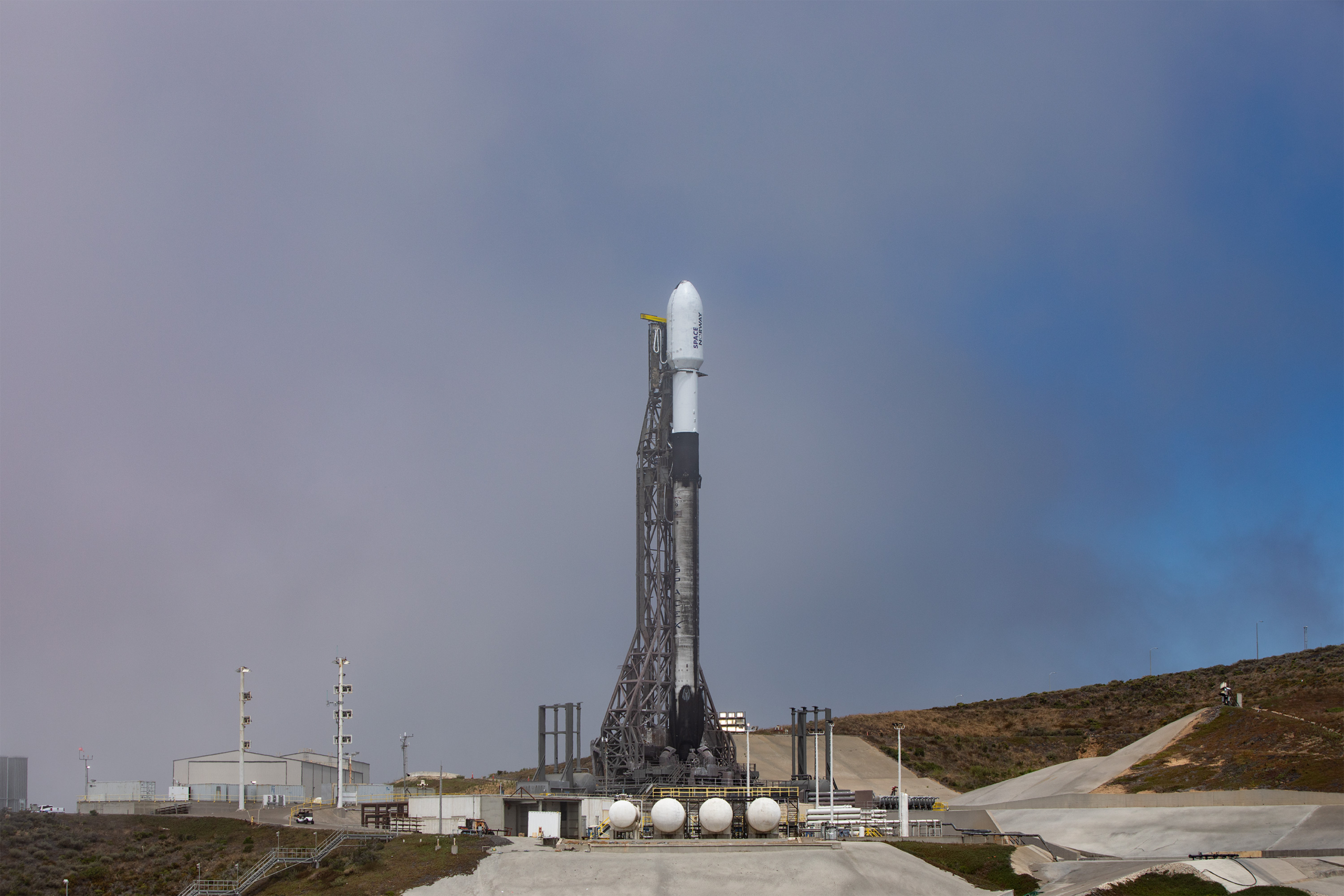
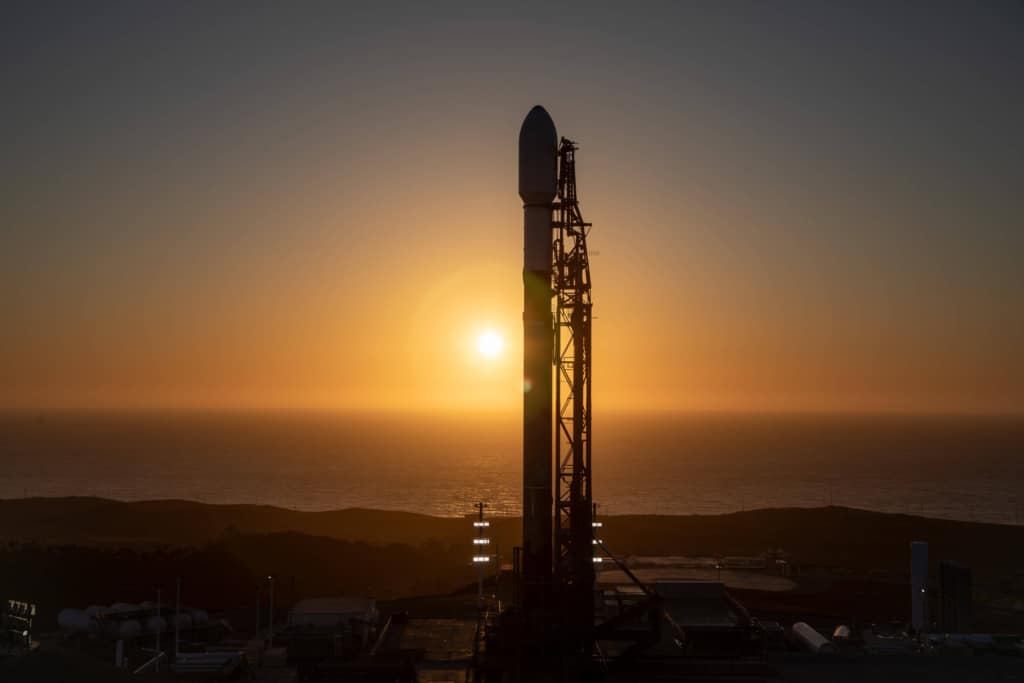
The largest section of the launch vehicle, its lower stage, is known as the booster. It is powered by nine Merlin engines, which provide a combined thrust of approximately 7.5 million newtons (equivalent to 1.7 million pounds of thrust). For comparison, this is equivalent to 60 F16 fighter jets at full throttle. The booster lifts the rocket and its satellites into space, then returns to land using the same Merlin engines and control fins mounted at the bottom of the booster.
SpaceX has a drone ship stationed in the Pacific Ocean to receive the booster as it makes a controlled landing on the vessel’s deck. The vessel is called “Of Course I Still Love You”. The booster carrying our satellites had already completed 21 launches and landings before our launch, making this its 22nd flight — a SpaceX record. The booster was subsequently retired after 23 successful flights.
The booster and the second-stage engine are supplied with approximately 500,000 litres of propellant in total: a combination of kerosene and liquid oxygen. The satellites’ health is monitored until just a few seconds before launch.
At 40 seconds before the scheduled launch, or T−40 seconds, we received final confirmation that all systems were functioning correctly and that the rocket and satellites were ready for launch.
Lift-off took place at 19:02:48 on Sunday 11 August, local time at Vandenberg, California (04:02:48 on Monday 12 August in Oslo).
Shortly after lift-off, three procedures take place: MECO, stage separation and SES-1.
At T+2 minutes 37 seconds, MECO — main engine cut-off — begins. All nine Merlin engines are shut down, causing the rocket to lose speed in preparation for the booster’s separation from the rest of the rocket. This procedure, known as stage separation, takes place at T+2 minutes 41 seconds. At this point, the booster begins its return to Earth for another controlled landing.
At T+2 minutes 52 seconds, SES-1 — the first second-stage engine start — takes place. The second-stage engine ignites for the first time and burns for approximately five and a half minutes.
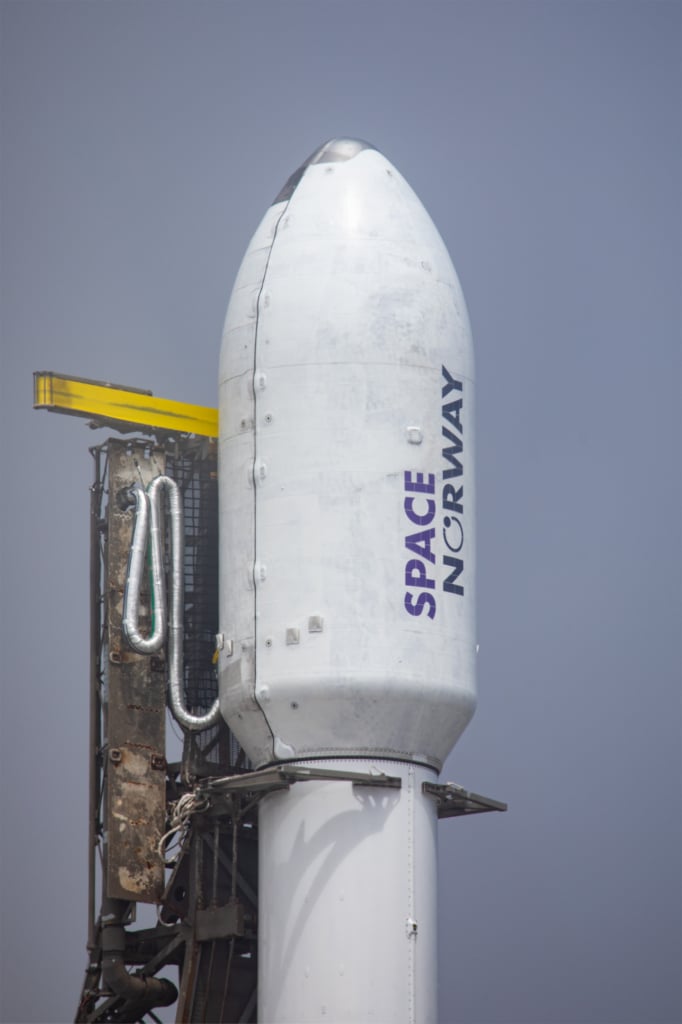
The next event is the separation of the fairing. The fairing is the protective enclosure at the very top of the rocket that surrounds the satellites. Protecting the satellites during launch is essential, but once the rocket reaches the vacuum of space, this protection is no longer required.
At T+3 minutes 35 seconds, the fairing separates into two halves, which descend to Earth, where SpaceX retrieves them for reuse on subsequent launches. SpaceX’s vessel “Go Beyond” is stationed in the Pacific Ocean to recover both fairing halves.
At T+8 minutes 22 seconds, the booster’s entry burn begins. The booster’s Merlin engines restart to slow it down before landing, and approximately 20 seconds later it is standing on the deck of “Of Course I Still Love You”. This marks SpaceX’ 318th booster landing.
Second-stage engine cut-off takes place at approximately the same time. The rocket then coasts for approximately 20 minutes before SES-2 — the second second-stage engine start — takes place at T+36 minutes 55 seconds. This burn lasts approximately 40 seconds.
The engine on this final stage differs slightly in design from the Merlin engines on the booster and is specifically adapted for propulsion in the vacuum of space. It produces 980,833 newtons of thrust in a vacuum (approximately 220,500 pounds of thrust).
Following SECO-2 — the second second-stage engine cut-off — approximately four minutes pass before the first satellite is released from the rocket, at T+42 minutes 38 seconds. A further five minutes pass before the final satellite is released.
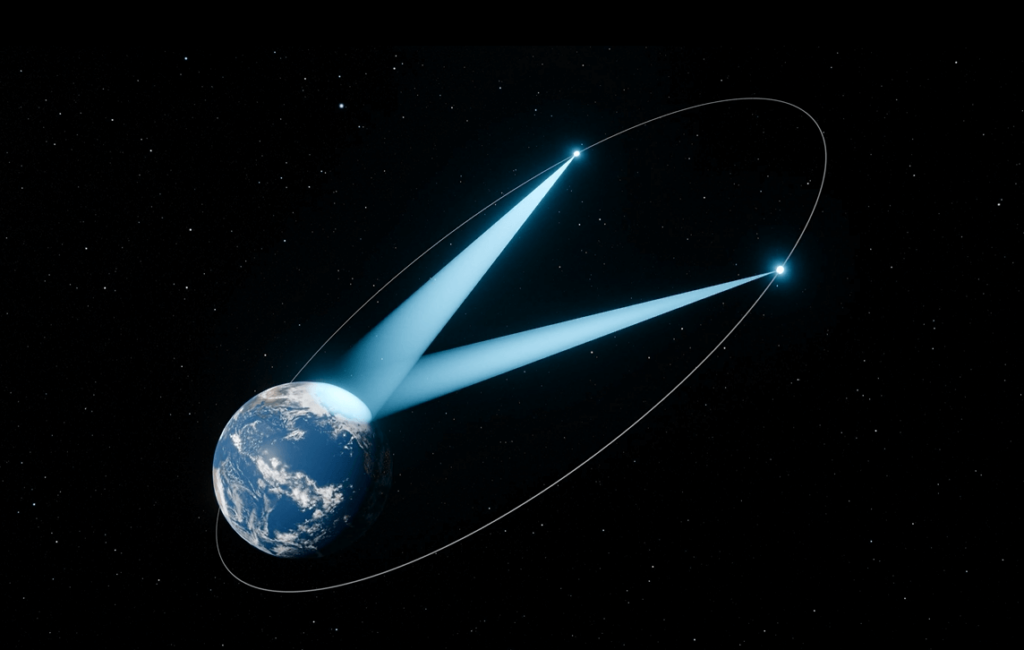
The two satellites are deployed several minutes apart to prevent a collision and to allow each to reach its respective orbit more quickly. Both satellites will operate in the same orbit, separated by four hours.
Once released from the rocket, the satellites must use their own propulsion systems to reach their final, highly elliptical orbits. This phase, known as orbit raising, takes 10 days for our satellites.