Emergency services are relied upon when incidents escalate, but they also depend on reliable communications when they need support. In remote areas, where mobile coverage can be weak or unavailable, that connection can be critical.
The siren sounds as the incident command vehicle leaves the main road and turns onto a gravel track. A report of smoke from a remote property has sent Ringerike Fire and Rescue Service(Ringerike brann- og redningstjeneste) along a rough route between woodland and rocky outcrops. In the distance, smoke rises above the treetops.
When the crew arrives, the incident commander quickly discovers that several buildings are on fire and that there are multiple casualties. The situation is far more serious than first reported. Additional resources are needed immediately, but the mobile signal is too weak to call for reinforcements. In a critical situation, reliable connectivity can make all the difference.
This scenario is fictional, but the challenge is very real. Emergency responders can be deployed anywhere, including areas where mobile coverage is limited or unavailable. Even then, they must be able to communicate with their own teams, other emergency services and wider contingency partners.
A broad and demanding operational landscape
Ringerike Fire and Rescue Service is responsible for fire and rescue preparedness across the municipalities of Ringerike and Hole. Its role is to protect life, health, the environment and property across a varied operational area that includes urban environments, local communities and extensive rural districts.
This diverse landscape brings communication challenges. The service must be ready to respond to major incidents in areas with uneven network coverage, while coordinating closely with other emergency services and civil preparedness organisations.
Effective response depends on reliable communication. Incident planning, decision-making, digital mapping, video support and real-time collaboration all rely on stable connectivity. As a result, more emergency organisations are recognising the importance of communications systems that can function independently of mobile networks.
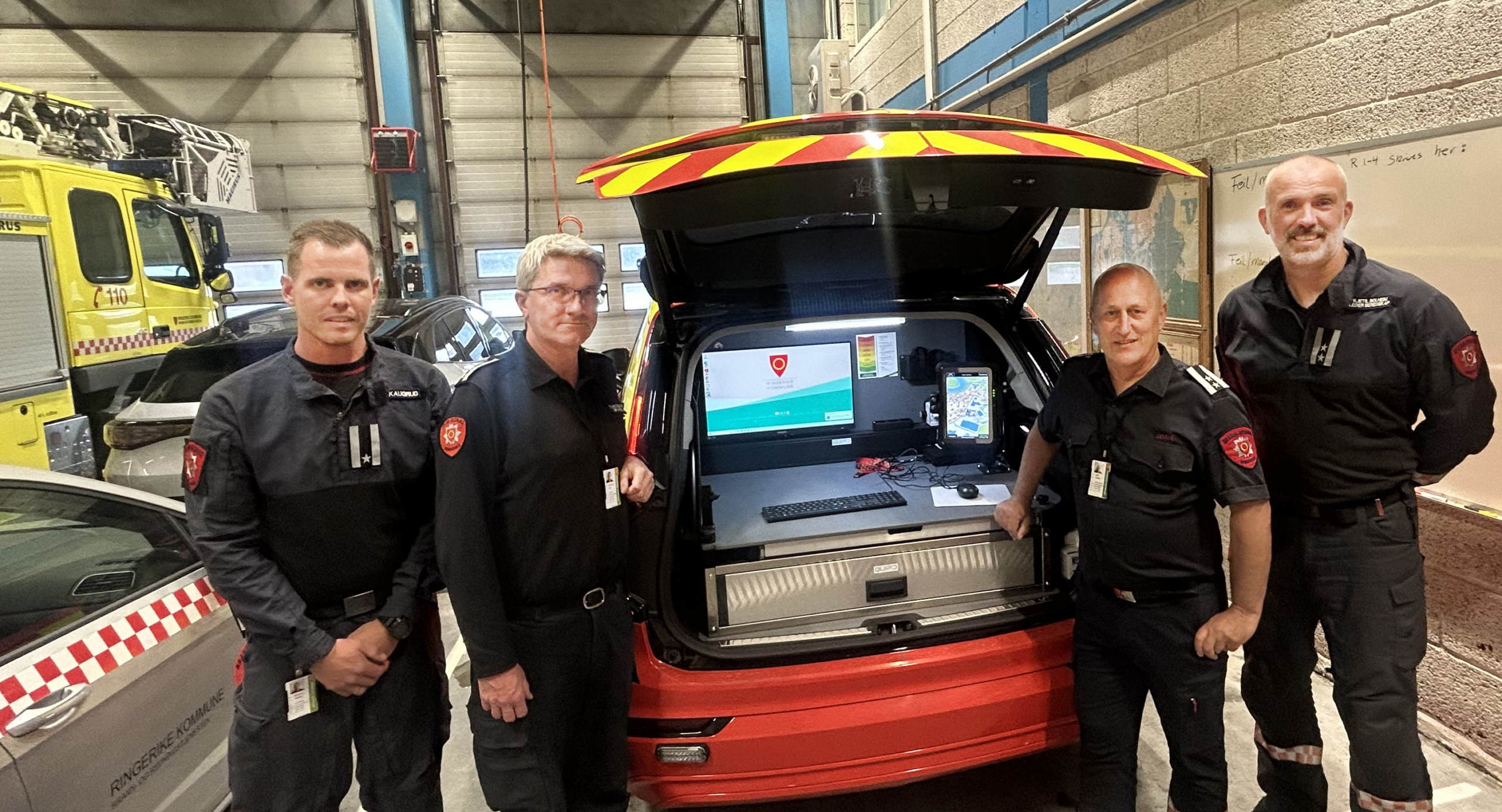
– We wanted a more robust and reliable communications solution, particularly in areas with weak or no mobile coverage. During major incidents, we depend on access to digital maps, incident plans, video solutions, collaboration with other agencies, and general internet access in our incident command vehicle. We also wanted a solution that could serve as redundancy if the mobile network were to fail, says Mathias Skaugrud, Fire Inspector at Ringerike Fire and Rescue Service.
Connectivity independent of local infrastructure
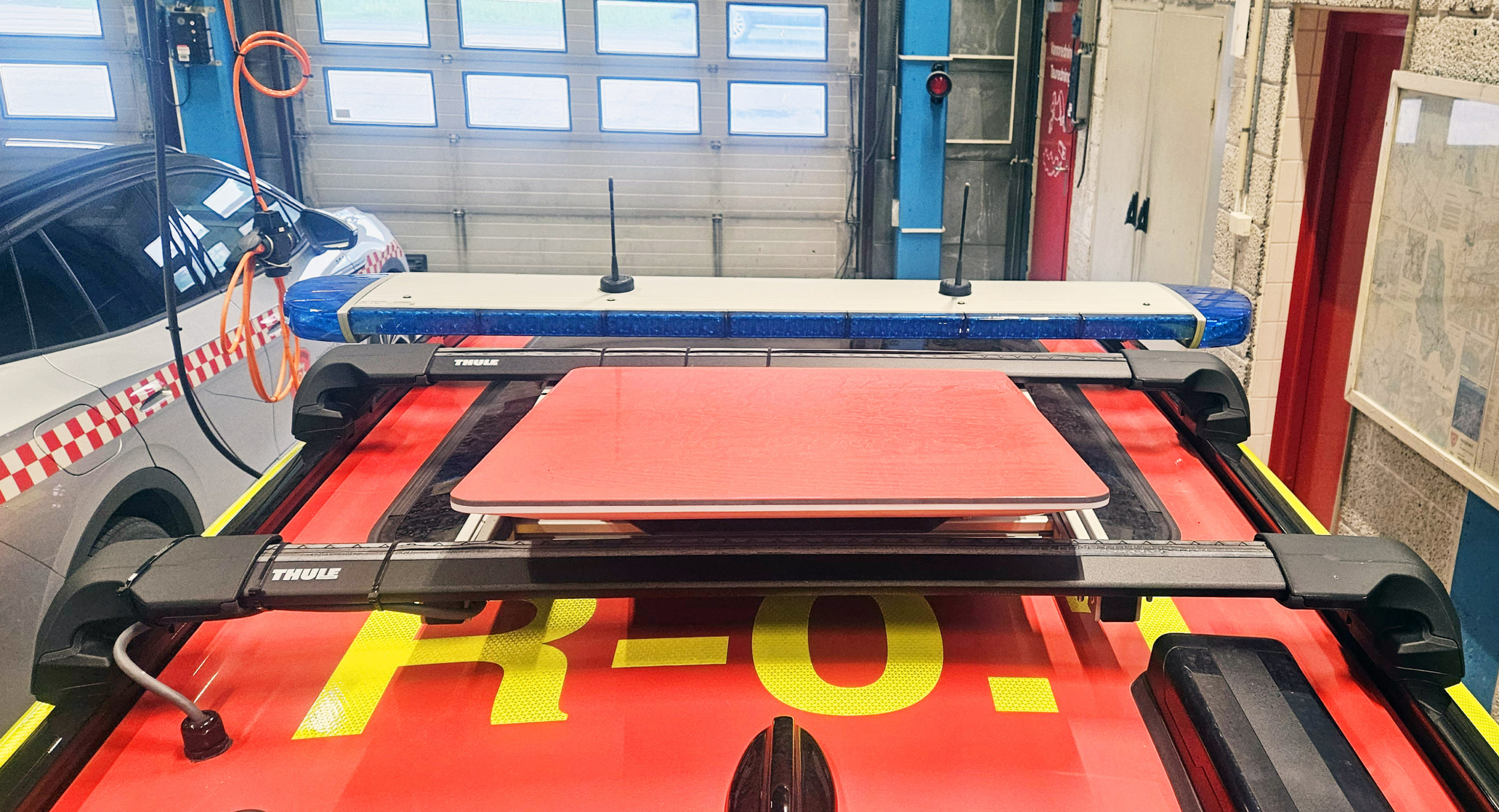
Ringerike Fire and Rescue Service needed a solution that could be adapted to its operational needs, especially for its incident command vehicle. The ability to communicate via satellite when required was a key requirement. A Starlink solution delivered by Space Norway emerged as a strong match.
– The main reasons were coverage, capacity, mobility and ease of implementation. Starlink gave us the opportunity to establish stable internet access almost entirely independent of local infrastructure. The solution appeared both forward-looking and flexible, while also being relatively quick to deploy, Mr Skaugrud explains.
The installation of the satellite solution in the incident command vehicle was completed smoothly.
– The installation process was fairly straightforward and well organised. It did, of course, require some planning in terms of placement, power supply and integration into the vehicle, but overall the process went smoothly. Cooperation with the supplier worked well, and the solution was quickly brought into operational use, he adds.
Improving operational capacity and flexibility
Ringerike Fire and Rescue Service has already seen clear benefits from the satellite communications solution. According to Mr Skaugrud, it has made daily operations easier and strengthened the service’s overall response capability.
– We are very pleased with the solution. It has largely lived up to our expectations in terms of stability, speed and availability. We find that it gives us greater operational capacity and increased flexibility during incidents. We have already benefited from the solution during both training exercises and real-life call-outs, he says.
– The ability to maintain stable internet access from the incident command vehicle makes it easier to retrieve information, share situational awareness and collaborate with other agencies in real time. This contributes to better situational understanding and more effective incident management, Mr Skaugrud adds.
A solution for the future
For emergency preparedness organisations, resilient connectivity is becoming increasingly important. Modern emergency vehicles and equipment rely more heavily on network access than ever before, while the ability to remain connected during uncertain or high-pressure situations is now central to effective response.
When asked whether he would recommend the Starlink solution from Space Norway to other organisations, Mr Skaugrud is clear.
– Yes, we would absolutely recommend the solution to other emergency preparedness organisations that require stable and mobile communications. The key benefits are high availability, rapid establishment of communications and internet access, independence from local mobile coverage, and greater resilience in emergency preparedness, he says.
– At the same time, we are increasingly dependent on a stable network in uncertain times, when mobile networks may at times fail and we still need to remain connected, concludes Mathias Skaugrud, Fire Inspector at Ringerike Fire and Rescue Service.