Back to all News

Strategic partnership to enhance satellite communication services in the Nordic region

Space Norway and Allente Sign Long-Term Satellite Agreement

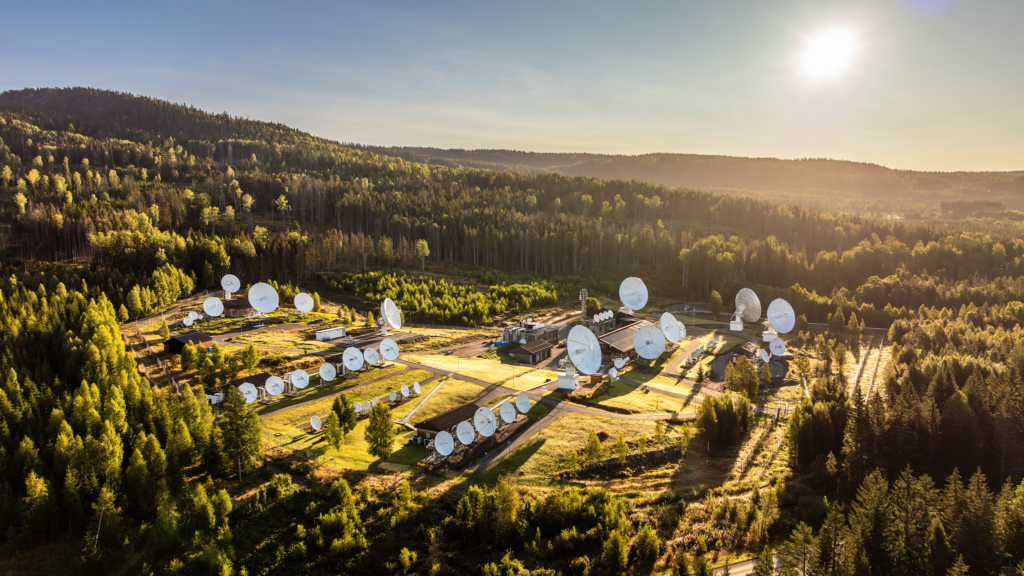
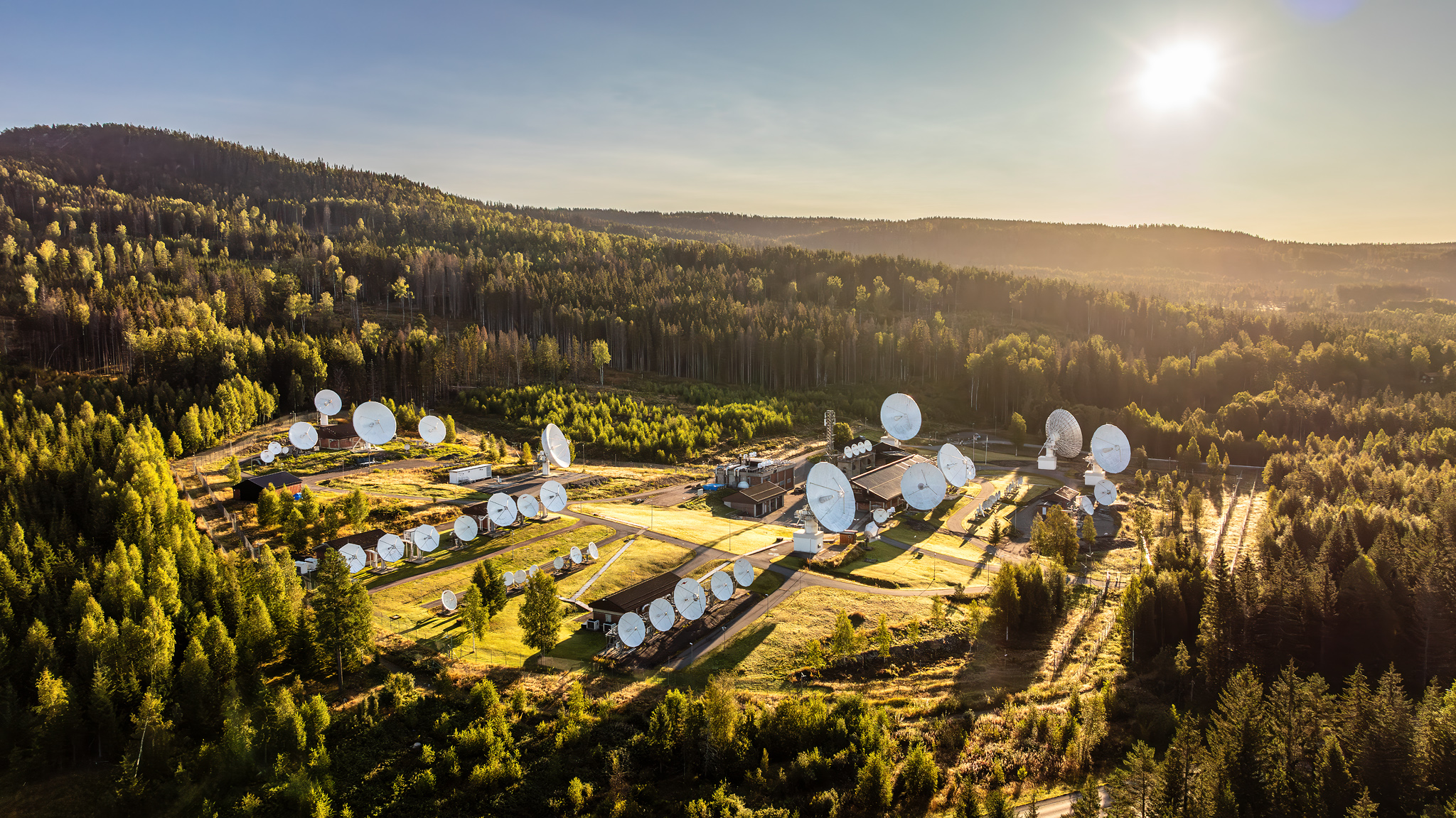
Nittedal Teleport Space Norway
Foto ©Kilian Munch

Space Norway, a leading provider of satellite services across Europe, and Allente, a major player in the Nordic pay-TV market, have announced a landmark agreement to secure and provide long-term satellite capacity from the 1° West orbital position to viewers in the Nordic territory. This partnership is set to significantly enhance communication infrastructure and service delivery across the region.

The long-term collaboration between Space Norway and Allente is based on powerful and inter-satellite diversification, using Thor5, Thor6, and Thor7 satellites. Following the expansion to the newly announced Thor8 program, the parties have agreed to continue their successful relationship.

“This agreement marks a pivotal moment in our efforts to expand and optimize satellite services for Nordic audiences”, said Ole Ledang, Director of Broadcasting Division at Space Norway.  “Supported by a dynamic and technically advanced encoding system and satellite uplink infrastructure at Nittedal Teleport, Space Norway provides reliable, flexible, and secure long-term solutions for Allente’s DTH platform,”

Jon-Espen Nergård, CTO of Allente, added: “This agreement secures the capacity we need to keep delivering the TV experience our customers expect. A reliable, high-quality service, available everywhere in the Nordics, whether in cities, small towns, or the most remote locations. Allente will continue to provide uninterrupted access to the content people love today and for many years to come”.


Background Information:

Space Norway has established itself as a leader in European satellite communications, providing essential services to diverse regions. Allente, known for its extensive reach in the Nordic pay-TV market, continues to innovate and adapt to evolving consumer demands.

About Allente

Allente, headquartered in Stockholm, Sweden and Oslo, Norway, is a prominent Nordic pay-TV distributor, offering a wide range of television and streaming options.

Back to all News

Press Release

Space Norway and Telenor extend the partnership to provide linear OTT and IPTV services to the Pay-TV Markets

Space Norway and Telenor extend the partnership to provide linear OTT and IPTV services to the Pay-TV Markets

Space Norway and Telenor Nordics are pleased to announce a new agreement focused on delivering IPTV and linear OTT streaming services to the pay-TV markets in Norway, Sweden, and Finland. This collaboration ensures the seamless, reliable, and innovative delivery of premium TV services to Telenor in the Nordics, raising the bar for digital entertainment across the region. 

Oslo, Norway – September 10, 2025 - This strategic alliance leverages Space Norway’s expertise in content aggregation, transcoding, and streaming of TV channels, alongside Telenor’s robust end-user solutions and streaming experience. Together, they aim to redefine the viewing experience for consumers by offering cutting-edge technology and diverse content options. 

Space Norway Director Broadcasting Division, Ole Ledang, expressed his enthusiasm about the partnership, stating We are delighted to strengthen our role as a trusted partner for Telenor Nordics, ensuring the delivery of top-tier, efficient IPTV and linear OTT streaming services to its Nordic pay-TV customers. This partnership enables us to adapt even further and remain fully committed to meeting the evolving demands for efficiency and quality.” 

Emil Hansen, VP Nordic TV in Telenor Nordics, added, “Our top priority is to provide value to our customers across Finland, Norway and Sweden through seamless, high-quality viewing experiences, on any device, anywhere. We are very happy to extend Telenor’s partnership with Space Norway and join forces in strengthening our presence in the Nordic market through scalable digital solutions.”   

About Telenor

Telenor Group is a leading telecommunications company with operations in the Nordics and Asia reaching 207 million subscribers across its portfolio. The company reported revenues of NOK 79.9 billion in 2024. Telenor is committed to responsible business conduct and driven by the ambition of empowering societies. Connectivity has been Telenor’s domain for 170 years, and the company’s purpose is to connect customers to what matters most. Telenor is listed at Oslo Stock Exchange under the ticker TEL. For more information, see https://www.telenor.com 

Back to all News

Space Norway launches global LEO satellite services as an Authorized Starlink Reseller.

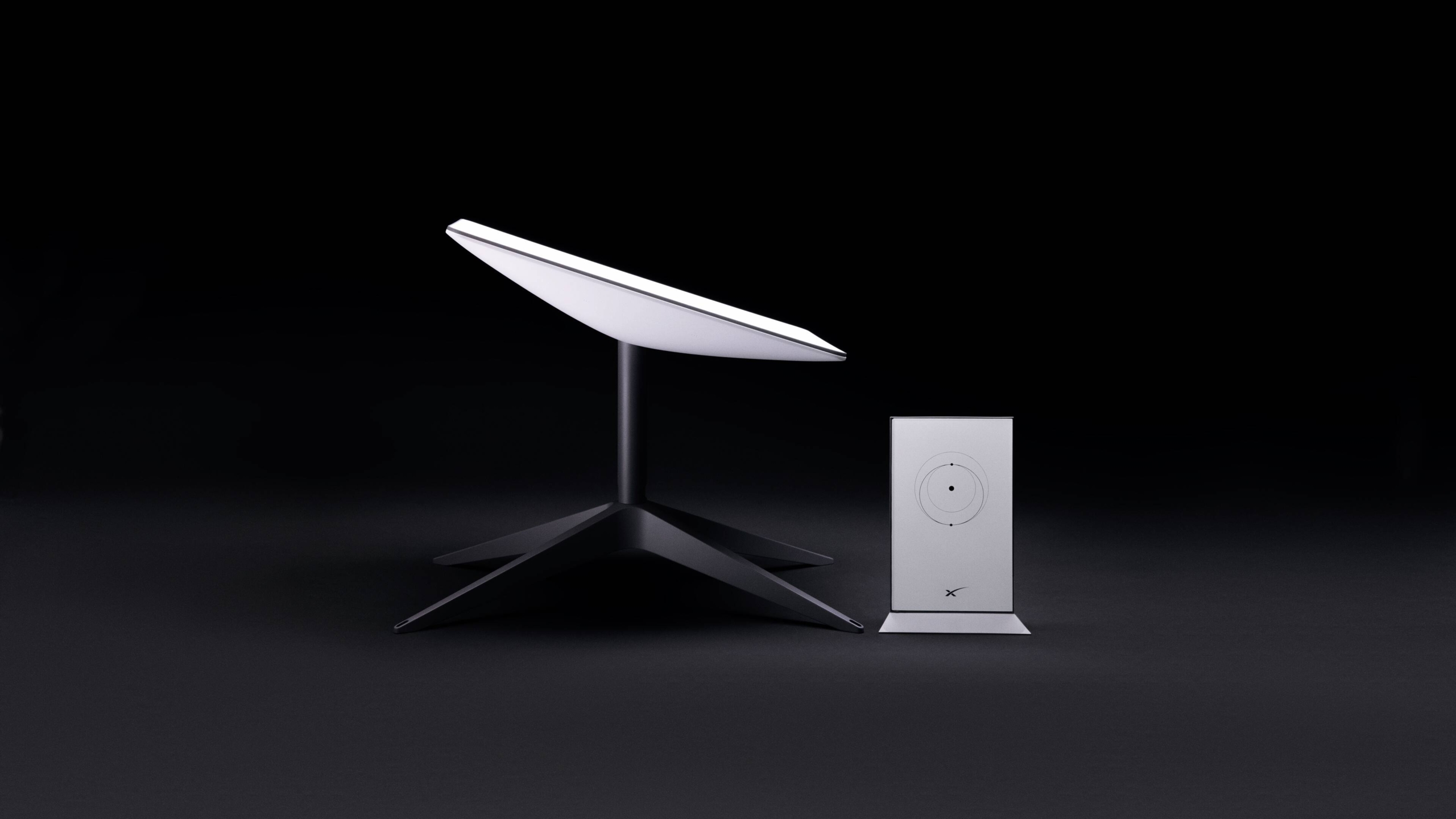
Starlink High Performance Kit
Starlink High Performance Kit_Starlink Studio. (Image: Starlink by SpaceX).

Space Norway, Northern Europe’s leading satellite operator, is pleased to announce that it has signed an agreement with Starlink by SpaceX to provide Low Earth Orbit (LEO) satellite connectivity services starting with immediate effect. This contract further extends the company’s strategy of offering multi-orbit infrastructure combining geostationary (GEO), Highly Elliptical Orbit (HEO) and LEO satellites.

The Starlink satellite constellation will enable Space Norway to provide low-latency LEO services to maritime mobility clients globally, and land-based enterprise clients throughout the EMEA region.

The Starlink LEO service is set to roll out in the coming weeks and will be supported by Space Norway’s customer portal allowing clients to effectively manage their service by monitoring usage, as well as upgrading and downgrading their service. Clients will be able to purchase the necessary hardware to run Starlink services directly from Space Norway.

Starlink LEO Services for maritime mobility
Starlink LEO services for maritime mobility. (Image: Starlink by SpaceX.)

Jan Hetland, Space Norway’s Director, Data Services, said: “This agreement allows Space Norway to complement its leading maritime mobility services, and will significantly enhance critical connectivity for our land-based enterprise customers. With Starlink’s cutting-edge LEO network and commitment to technological innovation, we are delighted to deliver resilient, world-class connectivity to both current and new clients. Our expert engineering team and 24/7 support desk are dedicated to ensuring seamless integration and continuous service excellence for our customers’ connectivity needs.”

Space Norway’s CEO, Morten Tengs, stated, “This agreement as an Authorized Starlink Reseller marks a significant milestone in our journey toward becoming a comprehensive multi-orbit service provider. By leveraging Starlink’s advanced LEO satellite network, we are positioned to deliver enhanced value to our diverse clients worldwide.”

Starlink LEO services for rural land-based locations.
Starlink LEO services for rural land-based locations. (Image: Starlink by SpaceX).

About Starlink by SpaceX

Starlink delivers high-speed, low-latency internet to users all over the world. As the world’s first and largest satellite constellation using a low Earth orbit, Starlink delivers broadband internet capable of supporting streaming, online gaming, video calls and more. Starlink is engineered and operated by SpaceX. As the world’s leading provider of launch services, SpaceX is leveraging its deep experience with both spacecraft and on-orbit operations to deploy the world’s most advanced broadband internet system.

Back to all News

ASBM payload operative

Viasat's ASBM payloads now ready for government service

Activity outside Andenes, and Andøya during NEMO Trials 2016. Photo: Simen Rudi, Forsvarsmateriell
Photo: Simen Rudi, Norwegian Armed Forces.

Viasat, Inc., a global leader in satellite communications, has announced in a press release that its ASBM 1&2 payloads are ready to deliver services for government customers. Services for commercial maritime and aviation sectors are expected to follow throughout 2026.
Late last year, Viasat successfully completed in-orbit testing of the GX10A and GX10B payloads on Space Norway’s two Arctic Satellite Broadband Mission satellites. Now the first services are going operational.

“We’re excited to begin delivering services in the Arctic region to support scientific research and to enable assured, resilient communications for tactical and strategic government missions. This is another step in Viasat’s capability to provide innovative, multi-orbit solutions and services to meet the evolving connectivity requirements of government customers worldwide,” said Susan Miller, President of Viasat Government, in the press release.

ASBM – ground-breaking for broadband in Arctic

In a comment, Peter Olsen, Director of Satcom at Space Norway, congratulates Viasat on reaching the first operational milestone.

“Congratulations to Viasat on starting service delivery in the Arctic region via the ASBM platform. It is excellent news that they are now operational for government customers. Space Norway value the partnership with Viasat on ASBM greatly, and we are very pleased to see that Viasat payload functions as planned and is ready to delivery mission critical services for the users.”

Before the Arctic Satellite Broadband Mission (ASBM), no satellites were capable of providing continuous broadband access for government users in the Arctic. Space Norway has achieved a ground-breaking mission with the ASBM project, enabling it’s customers and partners to deliver broadband services via two satellites in a highly elliptical orbit.

The ASBM 1 and ASBM 2 satellites work in tandem to provide continuous broadband coverage north of the 65° N latitude, following a highly elliptical orbit.

From payload in-orbit testing to declaring overall system ready-for-service

The ASBM satellites were launched into highly elliptical orbit (HEO) in August 2024. In addition to host payloads for Viasat, they also feature hosted payloads for the Norwegian Military and the U.S. Government, as well as a radiation monitoring capability for the European Commission.

Girish Chandran, Chief Technology Officer and President of Global Space Networks, said in the press release: “We would like to thank Space Norway, our project partners, and our teams for their continued hard work to make this project a reality. Bringing these payloads into service for government will help fulfil our vision to deliver the flexibility, coverage, and connectivity our customers need – wherever they operate.”

Providing broadband satellite coverage in the Arctic

Traditionally, satellite communications have relied on geostationary satellites (GEO), orbiting the Earth over the equator and providing communication coverage to vast areas of the Earth’s surface. However, in areas north of approximately the 75th parallel, geostationary satellites are too low on the horizon for securing effective and reliable connectivity.

Unlike geostationary (GEO) satellites, the ASBM satellites orbit the Earth in a highly elliptical orbit (HEO) ensuring continuous coverage over the northern areas. Their highest orbit altitude is 43,500 km when over the northern hemisphere and their lowest orbit altitude is 8,100 km when over the southern hemisphere.

See the ASBM coverage map on Space Norway’s web page.

Viasat’s payloads

The connectivity demands of governments, commercial mobility services, and scientists in the Arctic region have been rapidly increasing. For Viasat, the GX10A and B payloads are designed to provide broadband satellite coverage over the Arctic region for government and commercial customers. The payloads will expand the coverage area served by Viasat, further strengthening the company’s global coverage capabilities with this dedicated capacity for the Arctic region. These payloads also support Viasat’s roadmap of delivering multi-orbit services to support customers across markets.

Viasat is further expanding its high-speed broadband capacity and capabilities for government and commercial mobility customers with five new Ka-band satellites currently under construction, which are expected to enter service over the next few years.

ASBM satellites specifications:

  • Weight: Each satellite weighs around two tons
  • Size: Approximately 3x3x4 meters
  • Wingspan: 27 meters with unfolded solar panels
  • Satellite manufacturer: Northrop Grumman
  • Launch vehicle: SpaceX Falcon 9
  • Ground infrastructure: built by Kongsberg
  • Satellite Services (KSAT)

    Back to all News

    ViaSatellite interviews Space Norway's CEO on THOR 8, Lightspeed and future plans.

    Morten Tengs, CEO of Space Norway. Photo: Kilian Munch
    Morten Tengs, CEO of Space Norway. Photo: Kilian Munch.

    As Space Norway continues to strengthen its position in the satellite connectivity industry, these developments are set to enhance our service offerings and expand our reach. Read on to learn more about our direction in future satellite technologies and how these advancements will drive improved connectivity for our customers across the globe.

    This article was published in Satellite Today on April 2, 2025. (original article)

    Space Norway’s order of THOR 8 satellite last month marked a rare new Geostationary (GEO) satellite order in 2025. Coming almost a decade after THOR 7 was launched, it is a significant investment for Norway’s state-owned space company and will ensure the company continues its business in GEO.

    One year after the Telenor Satellite acquisition, Via Satellite interviewed Space Norway CEO Morten Tengs about why it was the right time to invest in a new satellite and its recent agreement with Telesat as Space Norway looks to bring a Low-Earth Orbit (LEO) component to its service offerings.

    VIA SATELLITE: You recently announced the commission of the THOR 8 satellite. Why was the time to right to invest in a new satellite?

    Tengs: We have been in the satellite operation business for many years and we have built a substantial business. This is the business we plan to develop further with THOR 8. The fact is several of the current satellites are reaching the end of life. We had to order a satellite now to make sure we will have continued service from around 2028 when THOR 8 will be ready. THOR 8 is a multi-mission satellite that will replace several of the current assets we have.


    VIA SATELLITE: There was a large time gap between THOR 7 and THOR 8, so there will be a huge difference in technology and capability. Would there be likely be a large gap between THOR 8 and THOR 9?

    Tengs: You are right. There was a huge gap. THOR 8 will replace several of the existing satellites. We have over time built a satellite team to be a lean and efficient entity. With services and capacity sales that are targeting different needs. When we introduce THOR 8, the satellite has capabilities to reoptimize what we do. The capacity can enable us to provide services to three different segments – DTH/video, maritime/mobility and also government. That is the reason for this. It is a multi-mission satellite.

    When it comes to THOR 9, we don’t have concrete plans. The focus is to deliver on THOR 8.


    VIA SATELLITE: Since the launch of THOR 7, the satellite world has changed in a huge way. What role can a GEO operator play in a world that is now dominated by LEO investments and assets?

    Tengs: The satellite world has changed a lot and we are part of that change. You can consider Space Norway to be orbit-agnostic or multi-orbit. We have been in the GEO world for many, many years with our THOR fleet and also with the 10-02 satellite that we share with Intelsat and since last year we launched the Arctic Satellite Broadband Mission (ASBM) program. We launched two programs in this ASBM mission. These are two satellites in high elliptical orbit where we provide important critical services for both government and private clients. So far, we have also been in LEO orbit, only focusing on Earth Observation (EO).

    We recently announced a cooperation with Telesat and Lightspeed and in a few years, we will be able to offer a full multi-orbit service. We are very happy with the arrangement we have with Lightspeed.


    VIA SATELLITE: Would you look to partner with other LEO operators other than Telesat?

    Tengs: It is not only limited to Telesat but we are very happy with the agreement with them. We think their network design is excellent and we think we will be able to offer premium services to both government and commercial clients. Having this service fully integrated into our product portfolio is a big milestone for us. It is not limited to Lightspeed though. 


    VIA SATELLITE: Given the volatile geopolitical situation in Europe, do you think Norway will invest even more in space-based assets going forward?

    Tengs: I can’t speak on behalf of the government, but we can see there is an increased focus on space. I think we as a company we will invest more. We are in a capital intensive business and we will make investments both in EO and communication going forward. 


    VIA SATELLITE: In terms of new verticals, is Space Norway looking to target new customer groups for its satellite solutions?

    Tengs: We are already in the government sector, but I think that is the sector where we will see the most growth going forward. Both in terms of civil and defense, I see strong opportunities and growth for us.


    VIA SATELLITE: Where do you see the demand for capacity on THOR 8? Why will these customers choose Space Norway rather than a LEO offering?

    Tengs: THOR 8 is a multi-mission satellite. We have a couple of DTH payloads designed to serve the Nordic market and Central and Eastern Europe (CEE) with broadcasting capacity. We have a partnership with Intelsat regarding broadcast capacity. We have announced a new deal with Intelsat, securing capacity for the duration of the THOR 8 satellite. The next payload/service is more based on wholesale capacity and this enables customers that are interested in installing closed networks that they control. We think there are clients that will prefer fully closed networks rather than putting their eggs in a LEO basket. That is the case for government and commercial clients, especially for governmental applications, where control and independence is particularly important. We have seen this demand. The way we have designed THOR 8 is to cater for these various services and capacities.


    VIA SATELLITE: What have been the benefits of Telenor Satellite becoming part of Space Norway? Has there been any form of culture change?

    Tengs: The acquisition/merger makes perfect sense. It is a combination of two worlds. Telenor Satellite was a more commercial orientated company focusing on customer needs and profitability where as Space Norway was focusing on innovation and large projects such as the Arctic Satellite Broadband Mission (ASBM) Project. So, combining these two operations gives a very good mix. We are very happy with how it looks. There are always challenges when combining two operations. But, nothing we can’t solve.


    VIA SATELLITE: Could you tell us about the launch of ‘Arctic Way,’ the world’s northernmost subsea cable system. What is the thinking behind this? How does this blend with your satellite assets?

    Tengs: The reason for the launch is that there is a current cable system today that will reach end of life in around 2028-2030. This is the right time to start a project and make sure there is continuity in the services. So, that is the simple background. There is a commercial market on the island of Svalbard. This new cable system will also have a link to Jan Mayen where there are only governmental needs. There are satellite activities at Svalbard also where we can serve.


    VIA SATELLITE: As the CEO of Space Norway, what do you see the key challenges for the company over the next 12-18 months?

    Tengs: The key challenge is to deliver on the projects that we have. So, we have THOR 8 and the cable system, the agreement with Telesat. We have a lot of business related activities that we need to deliver on and then we have the internal stuff, and the continued integration with Space Norway and Telenor Satellite. Those are the two areas we will be looking. I hope we will be spending more time on the external things rather than the internal things. 


    VIA SATELLITE: Where do you see the opportunities to grow the business for Space Norway over the next 12 months?

    Tengs: I think we will see significant growth in the government market for example, both on the communications side and the EO side. We see huge potential there. We have concrete plans in both those areas where we can’t go into detail just yet. I also see huge potential in the cooperation agreement we have with Telesat regarding Lightspeed. There are multiple areas where we see huge potential for Space Norway and we are very well positioned.

    Back to all News

    Morten Tengs appointed CEO of Space Norway

    Morten Tengs, CEO, Space Norway.
    Morten Tengs, CEO, Space Norway. Photo: Kilian Munch.

    The Board of Directors of Space Norway has appointed Morten Tengs as Chief Executive Officer (CEO).

    Chairman of the Board, Svein Olav Munkeby says:

    “Tengs has been deeply involved in company decisions and has been acting CEO since June 2024. This implies excellent knowledge about our ongoing and future projects. The Board is very pleased with this appointment and feels that Morten will deliver on our strategy.

    “Space Norway leads on in Norwegian space development. Space Norway has every opportunity for further growth and development, and I’m looking forward to continuing my work as CEO of Space Norway,” says Tengs.

    Back to all News

    Space Norway launches "Arctic Way": the world's northernmost subsea cable system.

    David Coughlan, CEO of SubCom, and Morten Tengs, CEO of Space Norway, sign the contract for the Arctic Way Cable System. (Photo courtesy of SubCom).
    Photo: David Coughlan, CEO of SubCom, and Morten Tengs, CEO of Space Norway, sign the contract for the Arctic Way Cable System. (Photo courtesy of SubCom).

    Space Norway is set to establish new high-speed connection from the Norwegian mainland to Jan Mayen and Svalbard archipelago.

    Space Norway has signed a contract with SubCom for the full system supply of the Arctic Way Cable System, including survey, design, manufacturing, and installation. Scheduled to commence service in 2028, this new system will become a critical asset for transmitting data traffic between the mainland, Jan Mayen, and Svalbard.

    “Space Norway owns, develops and manages critical space infrastructure and subsea cable systems. Establishing this new cable system is imperative to ensure uninterrupted connectivity for the Arctic community and to support Norway’s strategic interests. With SubCom’s proven track record in managing Arctic projects, they are the optimal partner for this significant program,” says Morten Tengs, CEO of Space Norway.

    “SubCom has maintained a successful relationship with Space Norway for decades, including our participation in the supply of the original Svalbard cable system,” said David Coughlan, CEO of SubCom. “Our experience with the customer and our expertise in the region – one of the most unique marine environments on the planet – will enable SubCom to efficiently produce and deploy this critical subsea cable infrastructure on behalf of Space Norway.”

    “While establishing new fibre infrastructure, we will continue to utilise the two existing cables to Svalbard as long as they remain functional, serving as a backup for Arctic Way. Although these cables are approaching the end of their 25-year service lifespan, we expect them to remain operational for several years past 2028,” explains Rune Jensen, Director of Subsea Cable Systems at Space Norway.


    You can find out more about the project in the official press release from the Norwegian Government (in Norwegian).

     

    Illustration: Arctic Way Cable System: Connecting Norway's mainland, Jan Mayen and Svalbard.
    Illustration: Arctic Way Cable System: Connecting Norway's mainland, Jan Mayen and Svalbard.

    System name: Arctic Way Cable System

    Configuration: Trunk-and-branch, repeatered subsea cable system linking mainland Norway, Jan Mayen, and Svalbard with direct shore end landings in:

    • Bodø, Norway
    • Jan Mayen
    • Longyearbyen, Svalbard

    Total length: 2350 km

    Location: Entirely within the Arctic Circle, between 67-78°N

    System provider: SubCom (full system supply including survey, design, manufacturing, and installation)

    Vessel: Reliance Class main lay vessel (Polar certified)

    Back to all News

    Space Norway orders a new communications satellite THOR 8.

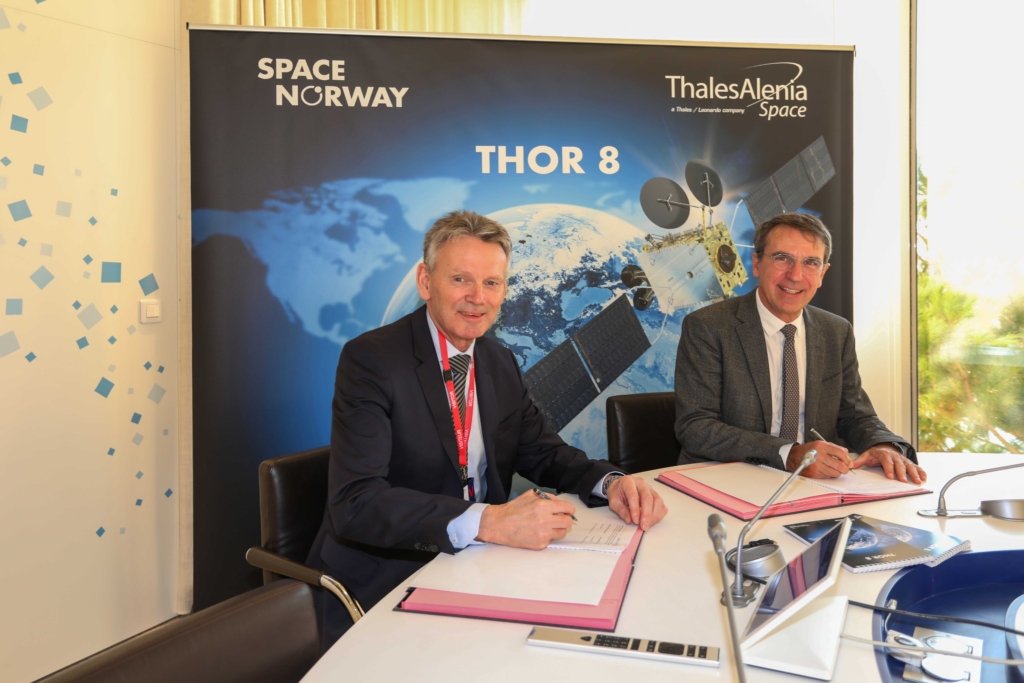
    From left: Morten Tengs, CEO of Space Norway, and Hervé Derrey, CEO of Thales Alenia Space, sign the contract for THOR 8. (Image: Thales Alenia Space)
    From left: Morten Tengs, CEO of Space Norway, and Hervé Derrey, CEO of Thales Alenia Space, sign the contract for THOR 8. (Image: Thales Alenia Space)

    Space Norway, Northern Europe’s leading satellite operator, announces the contract for a new geostationary satellite to join its THOR fleet at 1° West.

    Following the successful finalisation of an agreement with Thales Alenia Space for the design, construction, testing and delivery of THOR 8, the satellite is scheduled for launch in 2027. THOR 8 is designed as a dual-use satellite, equipped with three dedicated payloads on the Ku and Ka bands, and is expected to have an operational lifespan of more than 15 years.

    Illustration of THOR 8 satellite. (Image: Thales Alenia Space).
    Illustration of THOR 8 satellite. (Image: Thales Alenia Space).

    The satellite will deliver robust, high-speed connectivity for data communication services to governments and commercial clients in the maritime and land-based sectors across Europe, the Middle East and Africa. Additionally, THOR 8 will provide premium broadcasting coverage in Central and Eastern Europe, as well as in the Nordics.

    “THOR 8 will offer expanded coverage and capacity going into the future, ensuring the seamless and dependable connectivity services that our diverse portfolio of clients have come to expect”, said Peter Olsen, Director of Satcom at Space Norway.

    A momentous occasion: Executives from Space Norway and Thales Alenia Space gather to celebrate the signing of the THOR 8 satellite contract. (Image: Thales Alenia Space)
    Executives from Space Norway and Thales Alenia Space gather to celebrate the signing of the THOR 8 satellite contract. From left: Oddveig Tretterud, Project Director, Space Segment, Space Norway, Svein Olav Munkeby, Chairman of the Board, Space Norway, Morten Tengs, CEO, Space Norway, Hervé Derrey, CEO, Thales Alenia Space, Robert Carpentier, VP Marketing & Sales, Europe & North America, Thales Alenia Space, Ulrich Lambert, Space Norway Account Manager, Thales Alenia Space, Patrick Cordier, THOR 8 Program Manager, Thales Alenia Space, Gilles Brocard, Telecommunications Bids Director, Thales Alenia Space, Sean McGrath, THOR 8 Contract Manager, Thales Alenia Space. (Image: Thales Alenia Space)

    Hervé Derrey, CEO of Thales Alenia Space, said: “I would like to thank Space Norway for its continued trust in Thales Alenia Space. THOR 8 is our second satellite build for Space Norway, following THOR 6.”

    Morten Tengs, CEO of Space Norway, stated: “The deployment of the THOR 8 satellite is a significant milestone in our mission to deliver advanced and reliable connectivity solutions. This strategic addition will enhance our capabilities, providing critical services to safeguard the interests of both national and international governments while meeting the demands of our commercial partners. We extend our gratitude to Thales Alenia Space for their long-standing partnership and commitment towards this transformational project.”

    Cecilie Myrseth
    The Norwegian Minister of Trade and Industry

    “The decision to invest in a new satellite reinforces Space Norway’s position as a leading provider of satellite communication services in Northern Europe. – This is a great day for the Norwegian space industry! Norway has a world-class expertise environment, and Space Norway has managed to develop a commercial satellite project that strengthens our position in the space industry. Norway is a large and important space nation, and this is a very significant focus area for the government.”

    Back to all News

    New Norwegian small satellite in space.

    NorSat-4. Illustration: The Norwegian Defence Research Establishment

    Congratulations to Norwegian Space Agency on the successful NorSat-4 launch.

    The NorSat-4 satellite has now started its journey in a low orbit around the globe.

    “Space Norway is proud to have assisted the Norwegian Space Agency in developing the NorSat-4 satellite, and we are ready to operate it,” says Ivar Spydevold, CEO of Space Norway’s subsidiary Statsat.

    The operation centre at Statsat has already made contact with the satellite.

    “All telemetry readings are nominal so far. We are looking forward to operating the NorSat-4 satellite on behalf of the Norwegian Space Agency, states Spydevold.

    Space Norway’s role in the Norsat-4 project

    Space Norway has supported the Norwegian Space Agency with project management capacity throughout the project.

    “We have also supported in setting up data chains between the different organizations,” informs Spydevold.

    He adds:

    “And we were involved as well in preparing the mission control system to handle the satellite and operate it as part of the constellation of AIS satellites owned by the Norwegian Space Agency and the Norwegian Coastal Administration.”

    This satellite is the 7th satellite to be operated by Space Norway’s Statsat on behalf of the Norwegian Space Agency.


    Three payloads on board

    The NorSat-4 carries three payloads, two of which are experimental.

    The non-experimental payload is an AIS payload supplying the Norwegian Coastal Administration with additional AIS coverage.

    “We hope the AIS payload can start operations as soon as today, Wednesday,” says Spydevold.

    The other two payloads are a crypto unit from the Norwegian company EIDEL, and a low light imager (LLI) from the Norwegian Defence Research Establishment. The crypto unit will provide high-level encryption of the mission operation and of the downloaded data.

    The LLI is designed to take pictures at very low light, typically periods before sunrise and after sunset. The camera baffle for the LLI is easily identifiable in the picture of the satellite. The baffle ensures that strong light from the sun does not reach the camera, as that would damage or even destroy the imager.

    “The satellite manufacturer, UTIAS/SFL, will perform the commissioning, which will take a couple of weeks all in all, then we’ll take over the operation,” says Spydevold.

    Facts about NorSat-4

    • Main task: Monitoring ship traffic in Norwegian oceans.
    • Mass: 34 kilograms.
    • Measures: 30 x 31 x 45 cm.
    • Pay load: AIS-receiver (Automatic Identification System), low light camera, and Nanosat encryption device.
    • Owned by the Norwegian Coastal Agency, financed with support from the Ministry of Defence in Norway.
    • Space Norway’s Statsat is operating the satellite.
    • The low light camera is operated by and analysed by Norwegian Defence Research Establishment.
    • Satellite manufacturer is UTIAS / Space Flight Laboratory.
    • Instruments manufactured by Kongsberg Discovery Seatex, Eidel (Eidsvoll Electronics), and Safran Reosc.


    Employees at Space Norway Statsat watching the launch online.
    Employees at Space Norway watching the Norsat-4 launch online. Photo: Statsat, Space Norway

    Back to all News

    Norwegian space industry is the largest in the Nordics.

    Norwegian space industry is growing. In an interview with the Norwegian online media www.tu.no (Teknisk Ukeblad) Space Norway’s Satcom Director, Peter Olsen, stated: “For the first time, the USA has placed a classified payload on a foreign satellite, and the fact that is that this demonstrates the high level of trust Norway enjoys in the industry.

    Below you can read an abstract of the article:

    Norway has established itself as the largest player in the space industry in the Nordic region, mainly through Space Norway. Space Norway, founded in 1995, has experienced significant growth, and in November 2023, they acquired Telenor Satellite. The company operates several satellites and has plans for more until 2029.

    A milestone is that, for the first time, the USA has placed a classified payload on a Norwegian satellite, demonstrating great confidence in Norwegian space expertise. Space Norway’s project “Arctic Satellite Broadband Mission” (ASBM) provides broadband communication in the Arctic regions using HEO satellites.

    Traditionally, Norway has relied on other countries for satellite launches, but with the opening of Andøya Space as a spaceport, Norway can now launch satellites into orbit from the European mainland.

    Space Norway focuses on various sectors, including satellite communications, Earth observation, and underwater fibre cables. Projects such as HRWS C-band SAR and the Svalbard cable are central.

    Norway’s unique strengths, especially in the Arctic regions, position the country as an important player in both the European and global space industry. Sustainability and space debris management are critical aspects of their projects. The future looks promising with increased independence and integration with the European space industry.