Back to all News

Space Norway celebrates sustainability achievements with Eco-Lighthouse (Miljøfyrtårn) re-certification.
Telenor Satellite is re-certified for sustainability efforts by Eco-Lighthouse / Miljøfyrtårn.

Space Norway has been Eco-Lighthouse / Miljøfyrtårn certified since 2010 and recently, we have received our fourth re-certification.

A sustainable future needs real action

Sustainability and responsible business have been core values for Space Norway for many years within the company itself, as well as externally with its partners and suppliers. In 2010 the company became Eco-Lighthouse (Miljøfyrtårn) certified and is proud to have been re-certified for the fourth time, proving its commitment to a sustainable future.

A sustainable future needs real action and a concerted effort, and we take our share of the responsibility by taking concrete sustainability measures. As an Eco-Lighthouse, we also contribute to achieving several of the UN Sustainable Development Goals.

Space Norway decided to apply for Eco-Lighthouse (Miljøfyrtårn) certification back in 2010 when we were looking at our sustainability goals in general and joining the scheme was a tool we used to become compliant. Over the coming years, the scheme has become more recognised, resulting in the majority of companies we work with also becoming certified.

Eco-Lighthouse (Miljøfyrtårn) began in Norway and in 2014 was approved by the Government followed by, in 2017, approval from the EU. Companies must match a set of Environmental Management System (EMS) criteria to be approved and must go through a re-certification process every three years.

Awareness is key

Although a lot of significant sustainability improvements are reached through advancement in technology, Director Projects at Space Norway, Tone Liljeberg, explained how awareness is vital in driving forward the company’s sustainability goals, backed up by design improvements, internal strategies and processes.

“It is really important that all stakeholders are aware of what we are trying to do and have sustainability and the environment in their focus. This goes from internally with our own employees, to the suppliers we work with and their sub-contractors This is not something we can do alone. Being Eco-Lighthouse certified requires us to have an open dialog with vendors to ensure they are focusing on the environment, power consumption, recyclables and so on.”


Better efficiency with technology advancements

One major advancement in technology that has brought energy savings has been the introduction of surface panel heating on our antennas. The surface heating replaced the older style of hot air heating to act as a method of de-icing when it snowed. The new surface heating technology works similarly to a heating blanket and is more efficient as it is in direct contact with the back of the antenna. This new advancement initially resulted in a significant reduction of 1,500 watts/m2 down to 350 watts/m2, but a final reduction, which brought consumption down to 250 watts/m2, was led by ‘smart people thinking smarter’, said Ms. Liljeberg.

“Temperature sensors allow us to just heat the individual areas of the antenna which are snow covered. So, big changes in technology have led to the first major reduction, but by having this core value and focus on our minds, we have been able to ask ourselves, ‘can we do this smarter?’ And so, we have developed it further and seen more reductions.”
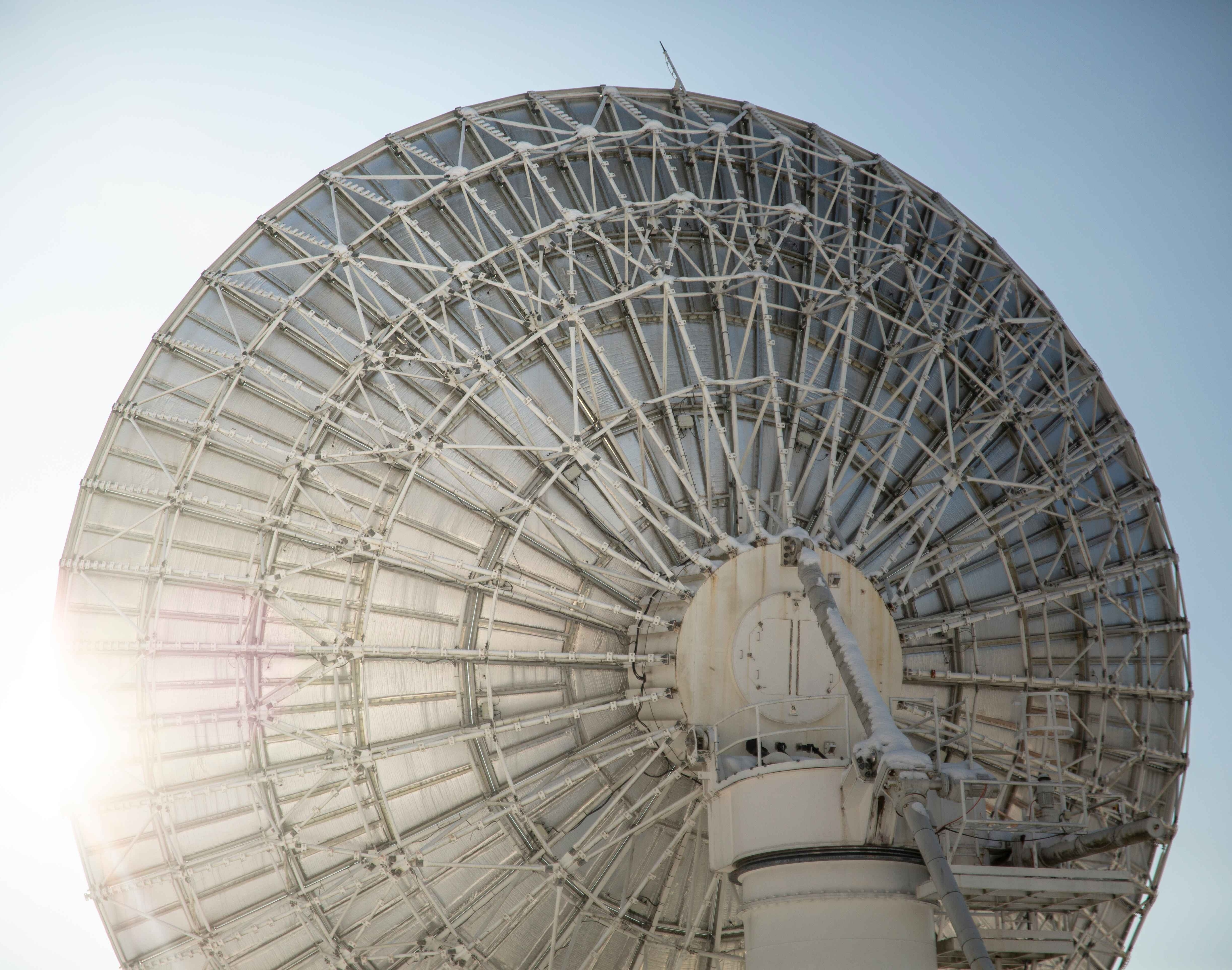
Image showing Nittedal antenna- Antenna Monica Monitoring and Control system
Ground antenna at the Nittedal Teleport.

Eco-friendly products and suppliers

Another measure we have put in place is increasing our use of ECO-certified suppliers and products we use for our canteen, cleaning and office supplies at Nittedal Teleport. In a review of the 30 largest suppliers to our Nittedal Teleport in 2021, a total of 71% were Eco-certified.


Impact of Covid

The Covid-19 pandemic of course saw a big reduction in our carbon footprint as it did for companies across the world. Telenor Satellite reported an all-time low for flights and general travel during the pandemic. Now that travel is opening up again, we are going to continue to carry out some meetings remotely and be selective over our travel needs.


Disposal of waste

Telenor Satellite ensures as much of its waste as possible is sorted and recycled, along with ensuring staff do not use single-use plastics in the office. The equipment we use is packaged in wood, so it can be recycled. In the canteen, everyone uses re-usable cups, cutlery and crockery. When suppliers attend the Nittedal site, we make sure they have containers close by for correct waste disposal.


We can all make a difference

While we are proud of the changes and reductions we have made to be more sustainable, improvements are always possible. Awareness is key for us and that is something we convey to all our stakeholders. We will not compromise on these values. The big changes will come with advancements in technology, but we can all work together to make the small changes significant.

Back to all News

Space Norway supports NTNU students in the building of world’s first selfie-taking satellite – SELFIESAT.

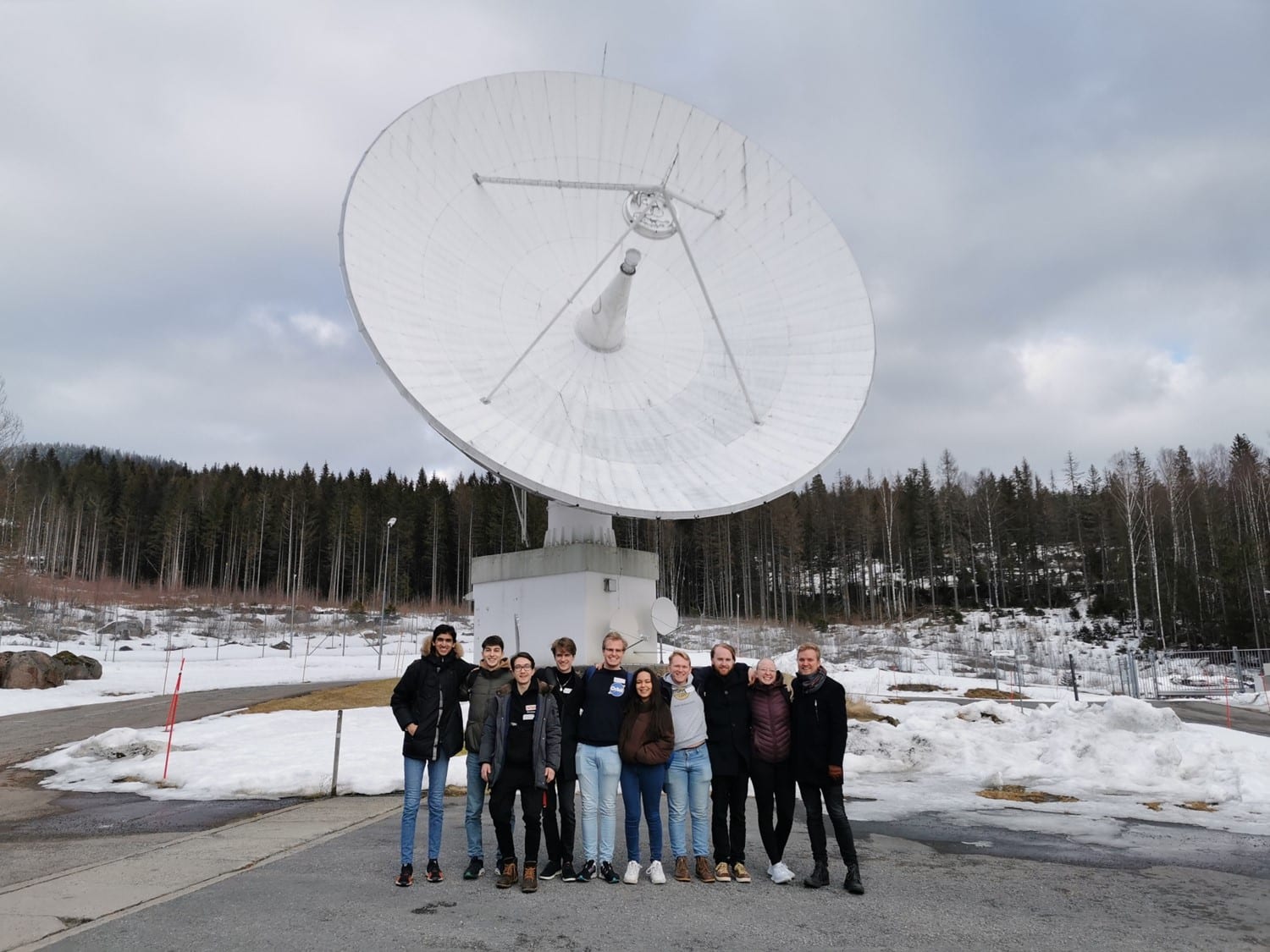
The picture demontrates ORBIT NTNU team that developed SELFIESAT
ORBIT NTNU team visiting Nittedal Teleport. From left: Soraj Singh Bisal, Mahdan Gazimagamaev, Nikolai Andresen, Jonas Krymski, Mathias Ådlandsvik Askeland, Lea Rose Nordhei, Magnus Mælhum, Jarle Steinberg, Mari Linnerud, Ulrik Falk-Petersen.

For Space Norway, ensuring the future of the satellite communications industry is a prime concern, and we are delighted to have played a part in an exciting project which has just come to fruition.

Passion for space

ORBIT NTNU is made up of a group of Norwegian University of Science and Technology (NTNU) students who have a passion for space and spend much of their free time pursuing that passion. With the backing of a number of space technology companies in Norway (including Space Norway), the group, made up of students from fields ranging from mechanical design and electronics to software engineering, management and marketing, has successfully built its first satellite using commercial parts developed for regular consumers and adapting them for space.

Satellite built around Raspberry Pi

Starting in 2018 as an ORBIT NTNU pilot project and using a Raspberry Pi as their payload computer, the students have succeeded in building a satellite which can operate in a low earth orbit (530-558 km) featuring five cameras and an external LCD screen onboard. The external LCD-display displays pictures sent in by the public and one of the cameras, mounted on a measuring tape arm, photographs the screen with the Earth in the background.

After several years of dedicated work by the ORBIT NTNU team, the satellite was ready for launch in March 2022. It was sent into orbit on a Falcon 9 as part of the Transporter 5 rideshare mission on 25 May 2022, launched by SpaceX from the Space Launch Complex 40 at Cape Canaveral, Florida.


Space Norway supports space engineers of the future

The relationship between NTNU and Space Norway began with a request from ORBIT NTNU to Space Norway’s Director of Satellite Operations, Richard Buckley, for their team to visit the company’s facilities so that they could understand how a satellite company operates. Unfortunately, it took a while to put a visit in place due to the severe restrictions placed on the satellite operations department by COVID. However, once the two teams had met it became clear that Space Norway could provide technical support.


A rewarding experience

Peter Elliott from the Satellite Operations team here at Space Norway has been providing technical support and advice to the students. “It has been enjoyable to be working with students who exhibit such enthusiasm for the space business”.

Space Norway has signed a three-year sponsorship agreement with ORBIT NTNU to provide both technical and financial support.


Looking to the future

Richard Buckley also sees other benefits going into the future, “Finding exceptional talent is always a challenge for companies, particularly in the field of technology, but we have come across many gifted young people through the course of the project, and we are keen to continue to support them and their peers as they learn more about space and the satellite industry.”

Back to all News

Expanding to meet maritime communication needs of the growing European market.

Telenor Satellite will expand its connectivity services on Newtec Dialog for ferries, cruise and OSV's in Europe.
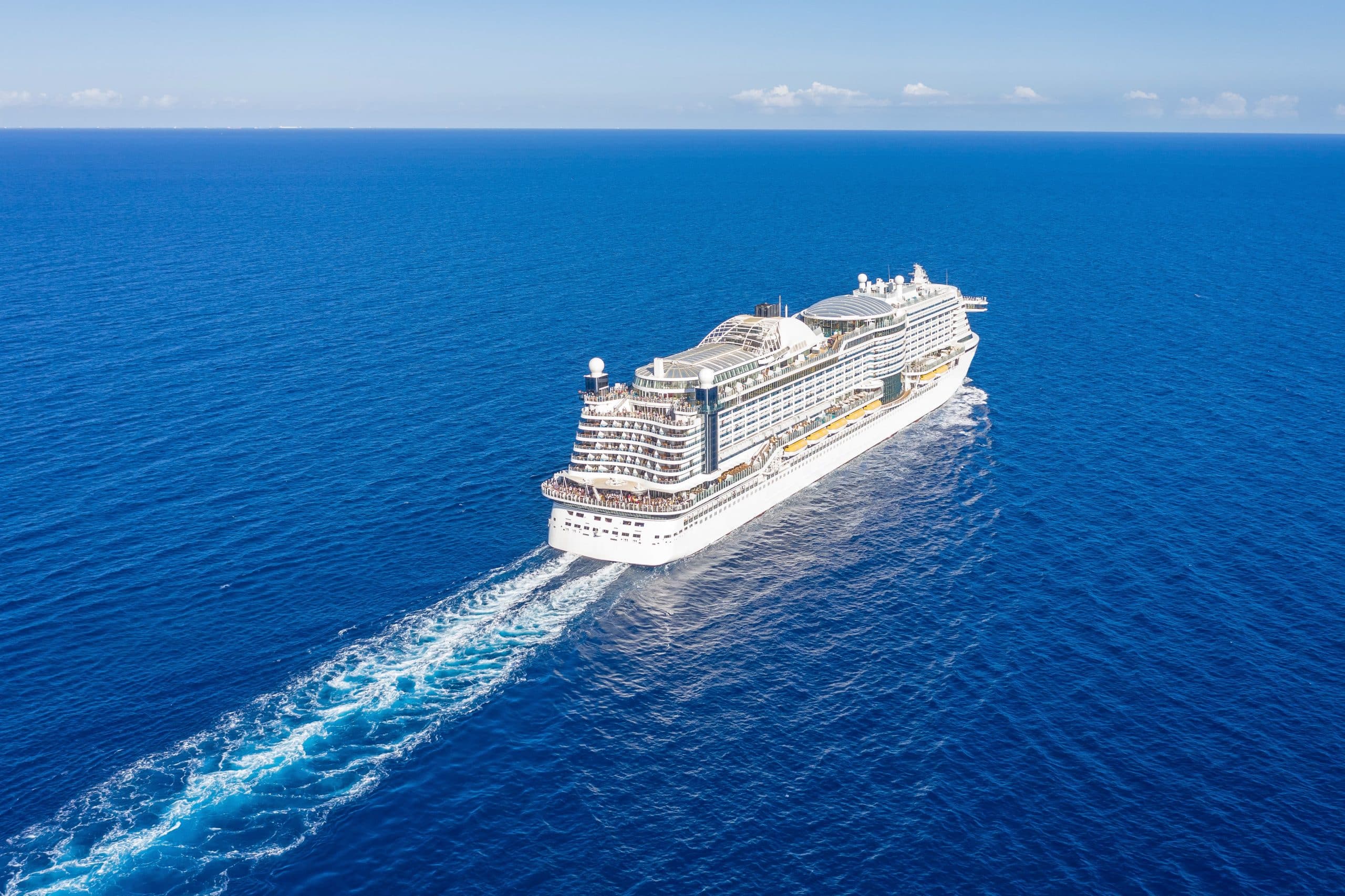
White ferry ship moored in port of Propriano, South region of Corsica island, France

Delivering Quality of Experience for high bandwidth vessels and offshore installations is at the heart of Telenor Satellite’s drive to service the satellite communications needs of the growing European maritime market.

And while the cruise and ferry sectors look to recovery from the effects of the global pandemic, general maritime, offshore oil & gas and fishing sectors are upping their demand for high quality satcom services.

Since 2016, Telenor Satellite has provided a regional Ka-band VSAT service to maritime users over its THOR 7 satellite from its 1° West orbital location. It targets the North Sea, North Atlantic/ Norwegian Sea, Baltic Sea, Black Sea and the Mediterranean. THOR 7 is equipped with an HTS Ka-band payload, providing regional coverage with a favourable look angle over the main European shipping lanes. The satellite utilises relatively small spot beams, which provide unprecedented high-power performance for maritime applications.

Jan Hetland, Director of Data Services division at Telenor Satellite, said that thanks to Telenor Satellite’s partnership with ST Engineering, its offering of high throughput services is about to expand for ferries, cruise and OSVs in the summer of 2022. Currently available on Anker Ka-band, the Newtec Dialog® platform allows Telenor Satellite to offer services of up to 150/50Mbps.

Telenor Satellite to further expand its coverage on THOR 7 Newtec Dialog® service in the Mediterranean region.


He also added that the company’s recent decision to collaborate with XipLink Inc., the technology leader in Wireless Link Optimization, greatly enhances its Anker Managed Service offering. Xiplink’s Wireless Link Optimization capabilities will boost the customers’ quality of experience “through enhanced speed and reliability while also improving the economics/affordability of the Anker service connections”, he said.

Drawing on Telenor Satellite’s 14 years of partnership with iDirect and combining this with XipLink’s unique WAN optimization capabilities allows Telenor Satellite to serve the most demanding customers out there. The Xiplink WAN optimizer solution provides a greatly improved Quality of Experience for high-bandwidth vessels and offshore installations carrying large numbers of passengers and/or crew, Mr Hetland added.

Telenor Satellite’s portfolio of ‘Anker’ connectivity solutions is used in a variety of sectors, ranging from maritime mobility and oil and gas, to fixed land-based VSAT services. It’s pan European coverage up to 79° North is complemented with an extended coverage of the North Atlantic, Middle East, West Africa and the Caribbean.

Back to all News

Space Norway announces new XipLink™ WAN optimisation service

Telenor Satellite announces new XipLink WAN optimizer service for maritime connectivity

Space Norway is pleased to announce a successful collaboration with XipLink™, Inc., the technology leader in Wireless Link Optimisation solution, that has further enhanced their Anker Managed Service offering.

The Anker Managed Service, delivered over an ST Engineering iDirect Velocity platform, provides Ka connectivity over the THOR 7 satellite to clients requiring higher bandwidth capacity and always-on connectivity in the maritime mobility sector.

“Both Space Norway and ST Engineering iDirect were very clear in communicating what was required of XipLink™ and our role in complementing the Anker service”, said XipLink’s CEO Jack Waters. “Specifically, XipLink’s WAN optimisation capabilities increases the end customer’s quality of experience through enhanced speed and reliability while also improving the economics/affordability of the Anker service connections. We are pleased that we have met these objectives and will continue to accept input from our partners and their end customers on how XipLink will add further network performance values.” Waters stated further that “working closely with the many functional groups within Space Norway and ST Engineering iDirect was necessary to bring this service to market. We have come to be treated as part of the team and appreciate the professionalism extended to us.”

“The largest benefit of this service is the substantially improved Quality of Experience when accessing the internet, both by the crew and passengers”, said Jan Hetland, Director of Data Services division at Space Norway. “Drawing on our 14 years of partnership with iDirect and combining this with XipLink™’s unique WAN optimisation capabilities allows us to serve the most demanding customers out there.” The Xiplink™ WAN optimizer solution provides a greatly improved Quality of Experience for high-bandwidth vessels and offshore installations carrying large numbers of passengers and/or crew”, he added.

“As a long-standing partner of Xiplink™ and Space Norway, we have a very collaborative relationship and this is reflected in the boost in performance that we have seen in the Anker Managed Service,” said Jerome Clapisson, Regional Vice President of Sales at ST Engineering iDirect. “We were pleased to involve Xiplink in this project, and our combined expertise and heritage in the maritime sector has allowed us to create an enhanced connectivity experience for all on board, both from the passenger and operational perspectives.”

More specifically, XipLink™ addresses several challenges of the satellite mobility market to include large number of users generating a high number of concurrent TCP sessions and the performance effects of high latency on transport protocols associated with GEO based satellite transport solutions. XipLink’s “XipOS” software is also perfectly positioned to offer hybrid connections of GEO, NGEO, Cellular, Terrestrial Wireless and Wireline connections to further extend bandwidth capacities while providing session persistence for ever higher uptime requirements.

About XipLink Inc.

XipLink™ is the leading independent global technology provider for Wireless Link Optimisation (WAN optimisation) solution using standards-based SCPS protocol acceleration, streaming data compression and Internet optimizations to deliver a better wireless experience over stressed communication links. XipLink™ is a privately-owned company with headquarters in Montreal, Quebec (Canada), integration facilities in Ashburn, Virginia (USA) and field personnel worldwide. www.xiplink.com

About ST Engineering iDirect

ST Engineering iDirect, a subsidiary of ST Engineering North America, is a global leader in satellite communications (satcom) providing technology and solutions that enable its customers to expand their business, differentiate their services and optimize their satcom networks. Through the merger with Newtec, a recognized industry pioneer, the combined business unites over 35 years of innovation focused on solving satellite’s most critical economic and technology challenges and expands a shared commitment to shaping the future of how the world connects. The product portfolio, branded under the names iDirect and Newtec, represents the highest standards in performance, efficiency and reliability, making it possible for its customers to deliver the best satcom connectivity experience anywhere in the world. ST Engineering iDirect is the world’s largest TDMA enterprise VSAT manufacturer and is the leader in key industries including broadcast, mobility and military/government. In 2007, iDirect Government was formed to better serve the U.S. government and defense communities. For more information on our platforms please visit www.idirect.net.

Back to all News

Celebrating twenty years of Occasional Use

Telenor Satellite' Occasional Team celebrates 20 years. Photo: shutterstock_1342547273

For the past twenty years, Space Norway’s Occasional Use team has been helping to bring the world’s most high-profile events into the homes of television viewers around the globe.

Whether breaking news, such as the extraordinary rescue of the Chilean miners caught up in the Copiapó mining accident in 2010, transmitting major sporting events including the London Olympic games in 2012 and 2018 Winter Olympics in PyeongChang, or sharing the grandeur and glamour of royal weddings, our team are an integral part of the broadcasting family.

We go global

Prior to 2001, the business had been focused on the Nordic market, supplying satellite communications for NRK, TV2 Norway, TV2 Denmark, Norkring as well as working with broadcasters in the UK. But following a cooperation agreement with Europe*Star to mutually market capacity on their satellites, Telenor Satellite’s Occasional Use team was able to spread its wings and start offering coverage worldwide.

In fact, the global service got off to a very high profile start as it coincided with the military action in Afghanistan which followed the devasting 9/11 terrorist attacks on the twin towers in New York and other US targets. The demand for satellite links around the world was suddenly enormous. Europe*Star 1 had superb Ku-band coverage from Afghanistan back to the UK and Telenor Satellite was the major reseller of this capacity and, added together with all the contacts within the global broadcast community that our Occasional Use team had developed (including ABC, CBS, NBC, BBC, Sky News, APTN, CNN, ITN, TV2, Al Jazeera), we were in an ideal position to provide this service. In fact, communicating with our customers in dangerous or remote, war-torn zones and providing the support needed is an essential part of the service we provide and is only made possible through the use of satellite technology.

Covering major news events

Over the years we have been present at many of the most significant moments in world news. This has included the tragic Kashmir Earthquake in 2005 where over 80,000 people died and a further 4 million were displaced; the eruption of Iceland’s Eyjafjallajökull volcano in 2010 which brought much of Europe’s air travel to a standstill; the horrific 2011 terrorist attacks on the island of Utøya and the heart of Oslo’s executive government quarter, taking 77 lives; the death of Nelson Mandela in 2013; the trial of Oscar Pistorius in 2014; the catastrophic Nepal earthquake in 2015 that claimed thousands of casualties and left nearly 3.5 million people homeless and providing coverage from world political conferences and summits, including the US elections in 2016, the German elections of 2021 through to the most recent Climate Conference “COP” in 2021.

Present with the Royal family

But alongside the dramatic news events, there have also been lighter moments. It would be fair to say that we have been present with the UK Royal family at weddings, anniversary celebrations, births and more, sharing in the nuptials of Prince William and Prince Harry, celebrating an incredible 60 years on the throne for the Queen in her Diamond Jubilee year and more recently the funeral of Prince Philip, the Duke of Edinburgh.

Sharing the wonders of the world

For the team, some of the most exciting experiences have come from their work in the field of wildlife and geographic documentaries, many of which have been broadcast in a huge number of countries from North and South America, Europe and Asia. These include Wild Alaska Live, Blue Planet, Polar Bear Watch and, for the UK market specifically, Springwatch. In these cases, the logistics of working in remote areas have frequently necessitated a little lateral thinking and it is testament to the relationships we have built up with satellite operators worldwide that we have been able to provide satellite capacity wherever and whenever it has been needed.

Telenor Satellite provided Occasional USe services for BBC & PBS production of “Wild Alaska Live” in 2017. Image: BBC.

Caption: When approached to provide connectivity for the BBC & PBS production “Wild Alaska Live” in 2017, Telenor Satellite’s OU team was eager to get involved in such a unique and challenging project. Photo: BBC.

The result of a collaboration between the BBC Studios Natural History Unit, Cloudbass (wildlife hub), Timeline and Telenor Satellite, Springwatch was one of the few new live productions to be aired during the 2020 pandemic

Caption: The result of a collaboration between the BBC Studios Natural History Unit, Cloudbass (wildlife hub), Timeline and Telenor Satellite, Springwatch was one of the few new live productions to be aired during the 2020 pandemic. Pictured here are presenters Chris Packham and Megan McCubbin on location in Cornwall where internet connectivity is almost non-existent. Photo: BBC.

Facilitating Live-to Cinema

From the early days of Bowie and Met Opera in the mid-noughties through to the recent red-carpet premiere of the latest James Bond film, “No Time to Die”, Live-to Cinema has grown beyond all expectations for content-owners and distributors alike and our OU team has played an active role from the outset. Christopher Bretnall of AOS Productions has been involved in all technical development, production and distribution elements over the last 15 years. He says, “The involvement of Telenor Satellite’s THOR 10-02 OU-inventory has played a huge role in that success. The consistent availability and performance of the OU space has enabled content-owners (including Met Opera, NT Live, ROH, RSC and many other ad-hoc one-off concerts and events) a great freedom to be able to broadcast live to cinema at any time.”

AOS Productions has been involved in all technical development, production and distribution elements of Live-to Cinema. Photo: AOS Productions

Caption: AOS Productions has been involved in all technical development, production and distribution elements of Live-to Cinema. Photo: AOS Productions.
From its satellite, THOR 10-02, Telenor Satellite broadcast the live red-carpet premiere of "No Time to Die" from London’s Royal Albert Hall to international pre-release screenings across Europe. Photo: Telenor Satellite
Caption: From its satellite, THOR 10-02, Space Norway broadcast the live red-carpet premiere of "No Time to Die" from London’s Royal Albert Hall to international pre-release screenings across Europe. Photo: Space Norway.

Sports buffs kept happy

The mainstay of the outside broadcast industry has to be sporting events. Unlike other, one-off happenings, football matches are a regular feature where fans expect nothing less than seamless broadcasting. These matches are interspersed with major world events including the 2014 World Cup in Brazil, Tour de France in 2020, Olympics (both Summer 2012 and Winter 2018) and country marathons.

Politics plays its part

With a history covering more than twenty years, we have seen the arrival, and departure, of many politicians in the UK, Europe and the USA. In the main this has involved wall to wall coverage of major events such as the Trial of Saddam Hussein in 2005-2006, UN Climate Change Conference in Copenhagen in 2009, national elections in Europe and USA, but also the EU Referendum in 2016.

And today the team are looking back over the successful announcement of the new German government which they transmitted. Having supplied satellite links to state broadcaster ARD (from 22 Satellite News Gathering (SNG) trucks located around Germany) when the voting process took place on 26th September, they were very pleased to be an integral part of both processes.

No mission impossible

From our relatively small origins as a regional provider of satellite capacity from our own THOR fleet of satellites, Telenor Satellite’s Occasional Use division is now a major supplier of satellite capacity worldwide, calling on its extensive network of satellite companies to provide the perfect solution for its clients so that they can broadcast anywhere, anytime.

Telenor Satellite's Occasional Use team provided services to BBC and PBS production of “Wild Alaska Live” – three-part series in 2017.
Working in Alaska brings unique challenges to the operational team; with three uplinks and two live broadcasts each day, it was a very complex project which involved more than 140 feeds over the two weeks of testing and filming – and all without a single glitch! Photo: BBC.

Back to all News

In collaboration with Hermes, we are pushing connectivity faster and farther.

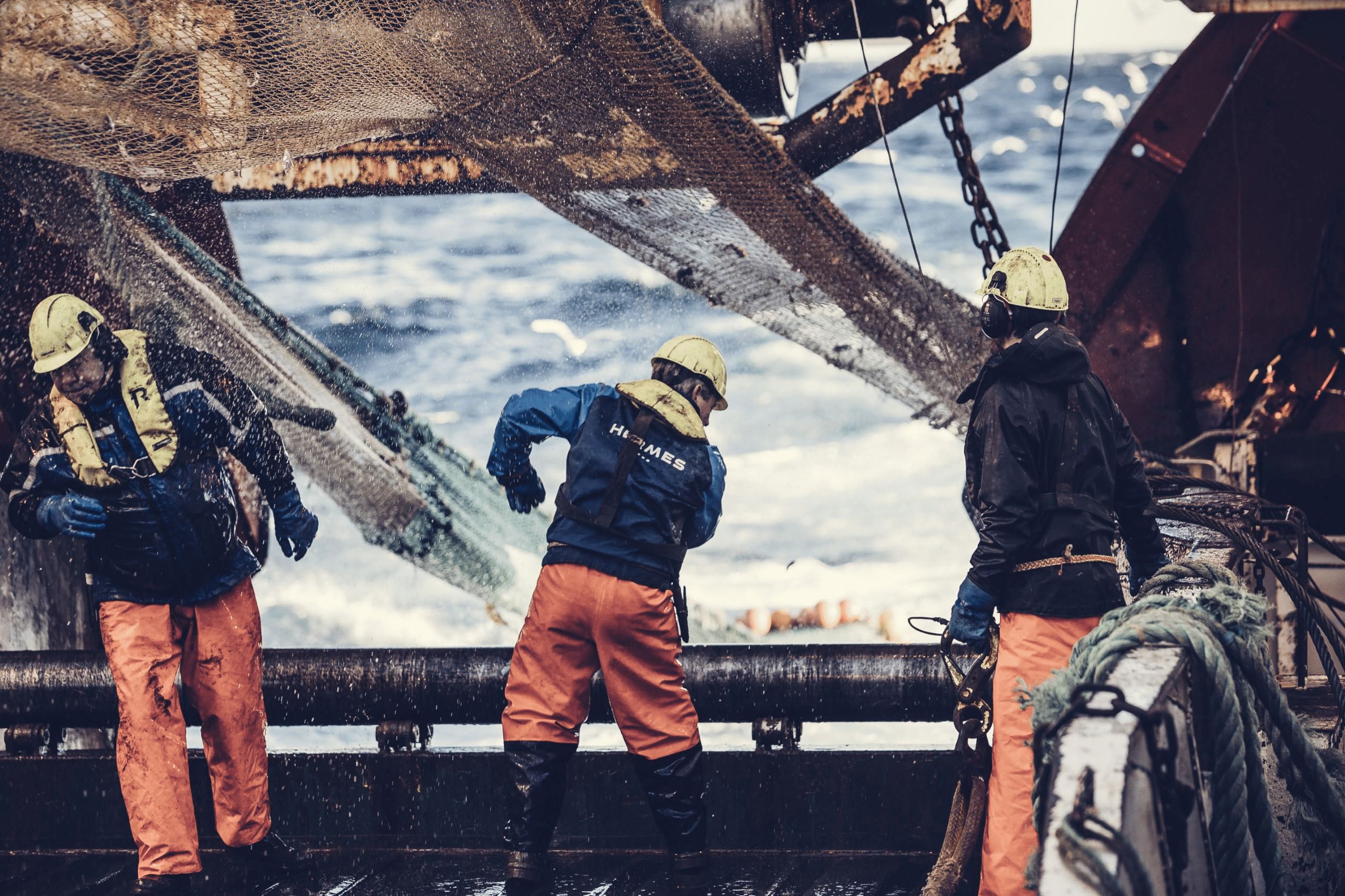
Without satellite connectivity, the operations in the far North would be even more tasking for Hermes fleet and crew. Photo courtesy of Hermes.
For vessels operating in the far north, such as Hermes, reliable satellite communication is essential. Photo: Hermes.

Ever wondered what it would be like to live and work on a fishing vessel in the far North without connectivity, where it’s cold and dark and conditions can be brutal? Thanks to Telenor Satellite and Telenor Maritime, crew onboard Hermes are able to optimise their work at sea and share their experiences with colleagues and family.

One of the most advanced Norwegian fishing vessels in terms of connectivity

Possibly one of the most recognisable names in Norwegian fishing, Hermes has been operating out of Tromsø in the Arctic Circle for just under 70 years. The company employs some 50 people of whom 45 are involved directly in the fishing business. The current Hermes vessel was acquired in 2006 and runs with a rotating crew who spend five weeks onboard followed by five weeks at home.

The ship operates 24 hours a day, catching and processing fish, with crew working two six hour shifts a day – a shift pattern that takes some getting used to. In fact, the only person onboard able to sleep for more than five hours at a time is the steward. And with its fishing grounds in the Barents Sea, around Svalbard and Spitzbergen, or even further north where conditions are icy, dark, cold and windy, it is a harsh environment for the ship and its crew.

Empowering a fishing vessel with the connectivity of a cruise liner

“With the ship in operation all day, every day, connectivity is a big concern, so a reliable satellite communications provider operating in the far north is essential – and Telenor Satellite fits the bill perfectly”, explains Jan Roger Lerbukt, CEO of Hermes. “We rely on excellent communications links, not only for the safe operation of our vessel but also for our crew who use it to unwind during their off-time.” But the ship uses its communications links for far more than that!

Jan Roger Lerbukt, CEO of Hermes, runs what is probably one of the most advanced Norwegian fishing vessels in terms of communications. Hermes. Photo: Marius Fiskum / Courtesy of Hermes
Jan Roger Lerbukt, CEO, Hermes. Photo: Marius Fiskum / Courtesy of Hermes.

One of the first things Jan Roger did when buying the vessel was to install a satellite connectivity. This has been updated regularly so that the links available on board are always at the cutting edge of connectivity. As would be expected, the ship has wi-fi throughout. What is perhaps more unusual is that there are also a lot of cameras onboard which are used for live video feeds from the vessel. To handle this demand for download and upload functions, the ship has exceptional bandwidth which is more in line with that found on high-end cruise vessels.

Remote streaming in high definition

“We have been involved in a number of TV broadcasts and YouTube videos, so we make very good use of our bandwidth. We are currently in the process of developing weekly shows that we will be streaming in High Definition (HD). High bandwidth isn’t only beneficial in terms of broadcasting, but also for crew welfare. Crew are able to use their mobile phones exactly as they would on land and, bearing in mind that we operate in extremely remote areas where injuries or illness can be particularly dangerous, we are able to consult directly with medical staff via zoom or similar. And when you factor in the increased happiness of the crew, the additional bandwidth has significantly improved safety onboard, as well as staff retention.”

A Ku-, Ka-band arrangement to ensure redundancy

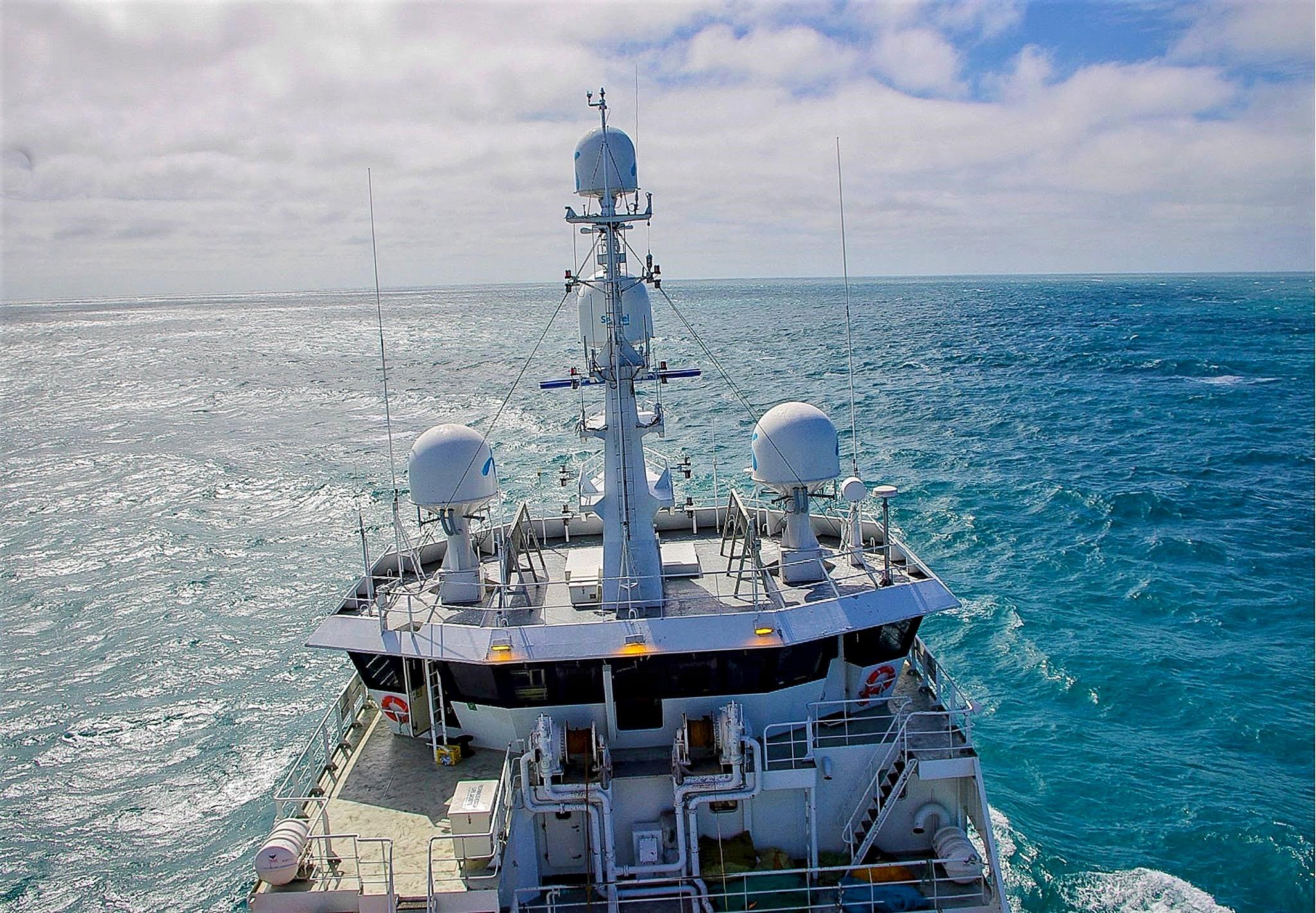
The equipment onboard Hermes is quite remarkable for a fishing vessel. It has three satellite dishes, one Ka-band and two Ku-band. The original dishes were Ku-band, but there was a need to double up because of blockages caused by the mast.

The Ku-band antennas are 1.5m each and very heavy, so they can’t be positioned high on the mast, but must be placed on the wheelhouse. The Ka-band antenna is 1m (Ka-band can operate with a much smaller diameter terminal) and so is located higher on the ship. This delivers a 12/3 Mbps Ka-band service, which could be upgraded to 24/6 Mbps if required. Hermes needs as much stability as possible when operating in the far north, so some redundancy is important. What is more, it is impossible to carry out repairs at sea so back up is vital.

“I would actually like to have an additional Ka-band antenna too so that we have backup on both bands. In fact, we have been experimenting with the Ka-band and we have been very pleased with the results when we are further south. One of our Ku-band dishes has been in for repairs for the past few months and by combining the two bands we have been running at very close to 100%.”

Hermes is outfitted with sophisticated satellite connectivity equipment, including three satellite dishes. Photo: Hermes.

Direct access to connectivity expertise

Hermes began livestreaming in 2016 when the company first moved to Telenor Satellite via its communications supplier, Telenor Maritime. Knut Fjellheim, Chief Technology Innovation Officer at Telenor Maritime, was very impressed with the set up on Hermes, “This fishing vessel operating out of Tromsø was, and still is, probably one of the most advanced in Norway in terms of communications.”

Hermes bought two Ku-band antennas that had previously been used by NRK (the Norwegian state broadcaster) for one of its slow TV shows. In 2019 Hermes undertook 35 days of livestreaming from Greenland which was shown on both Norwegian television and YouTube. None of this would be possible without the satellite communications links provided by Telenor Satellite in the far north.

It is Telenor Maritime which provides the complete service to Hermes, but Jan Roger has found the close relationship between the two companies to be particularly helpful. “When you try to do something special you need to have people who understand what you’re trying to achieve. Being able to talk to or connect to the right people, in this case the satellite owner or the bandwidth provider, is vital when you are pushing the boundaries. And whenever Telenor Maritime has new technology, we’ve been happy to be the guinea pig for that and it’s been very good for us to be first mover in this space.”

Jan Roger Lerbukt, CEO of Hermes, runs what is probably one of the most advanced Norwegian fishing vessels in terms of communications. Hermes. Photo: Marius Fiskum / Courtesy of Hermes
Jan Roger Lerbukt
CEO, Hermes.

“We have found that the service we have received from Telenor Maritime and Telenor Satellite has been perfect for us as they are both prepared to push the technology. Rather than working within perceived limitations they are always ready to see what is possible and work around any problems to provide us with the outcomes that we need.”

Pushing the boundaries of technology

“On occasions we have tested technology and we couldn’t believe the speeds we were getting, and how far north we were able to travel and still receive a great service. I think we are the first commercial users of this service in the region, and I don’t think you will find any other Norwegian vessel with better internet connections than we have on Hermes.”

The company actually has 13 Mbps of combined upload delivered by way of a 12/3 Mbps Ka-band service delivered on Velocity® together with a 30/10 Ku-band service using Dialog as it needs to deal with the challenges of latency and compression of the livestreaming. In addition, there needs to be sufficient bandwidth to deal with drops in connectivity – the audience expects to receive a good quality result.

Jan Hetland, Director, Data Services.
Jan Hetland
Director, Data Services, Space Norway (formerly Telenor Satellite)

“We pride ourselves on giving our clients the optimal solution for their needs, and we thoroughly enjoy being thrown a real challenge, and then finding a way to solve it. Operating as far north as Hermes does can pose real challenges for satellite communication links, but I am pleased to see that our technical team was able to resolve these.”

Back to all News

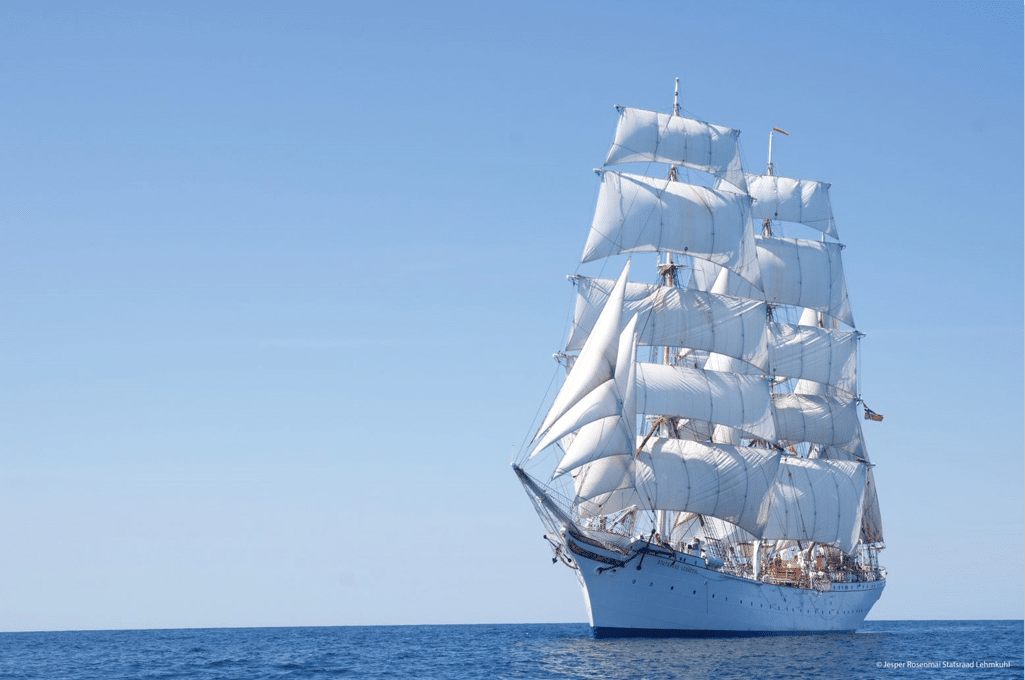
Connecting Norway’s oldest and largest square rigged sailing ship Statsraad Lehmkuhl.

Satellite connectivity for Statsraad Lehmkuhl

Connecting the Statsraad Lehmkuhl with state-of-the-art satellite communications was a memorable moment. This achievement brought seamless communication to the high seas, enhancing the capabilities of this historic vessel while preserving its legacy and enabling live broadcasting of a beloved series for NRK.

Connecting Statsraad Lehmkuhl

Broadcasting live for three hours daily over a six-week period is demanding for any broadcaster, so imagine throwing into the mix a different location every day, and all without a fixed land connection.

That was the situation for the NRK (Norwegian State Broadcaster) production team based onboard the legendary Statsraad Lehmkuhl as it sailed down the coast from the northern tip of Norway to Bratteklev in the south (with a side trip to Lerwick in the Shetland Islands) during the summer of 2021. Broadcast of “Sommerskuta Minutt for Minutt”- a slow TV show filmed onboard was enabled by the robust satellite communications links provided by Space Norway.


Mobile connectivity – uninterrupted for six weeks

To the delight of thousands of viewers at home, whether dipping in and out of the slow TV show or following it every step of the way, a seamless transmission of the much-awaited program was maintained throughout and supported by Space Norway’s expertise and reliable connectivity.

To ensure uninterrupted streaming, 20/10 Mbps on Ku-band were supplied via THOR 10-02 satellite using the Dialog platform. With this service Statsraad Lehmkuhl was able to use a relatively small maritime antenna to transmit a high bitrate, so neither the aesthetics of the ship nor the quality of transmission were compromised.


Learning the ropes – at sea and at home

As Norway’s oldest sailing ship at 107 years old, Statsraad Lehmkuhl is used to attracting attention wherever it sails. But this summer, the ship, its crew and 30 plus ‘fellow sailors’ selected from the large number of volunteers angling for a chance to sail on this magnificent vessel, were continuously in the spotlight as the ship took in 29 Norwegian ports as well as Lerwick in the Shetland Islands.

While the volunteers were learning the ropes and exercising their muscles hoisting the sails, the production team were making sure that those on land were able to share in the experience from the comfort of home.


A quiet life in the spotlight

“Sommerskuta Minutt for Minutt” followed the ship throughout its journey, giving viewers glimpses of the breath-taking scenery of the Norwegian coastline in real time, while also allowing viewers to experience life onboard a sailing ship, not just the highlights but the ‘minute by minute’ joys and trials of a life at sea.

Also making cameo appearances were well-wishers lending their support from land. People (and dogs!) turned out all along the route for the opportunity to see Statsraad Lehmkuhl and its crew of professional sailors as well as those amateurs who had joined the ship for a first experience of sailing.


Maintaining communications links

While the main focus of the communications links was on the slow TV show, for the crew members and NRK production team it was just as important that they had access to connectivity during their (limited) leisure time and to stay in contact with their families and friends back home. And last, but definitely not least, Space Norway also supplied connectivity to support the operational needs of the vessel throughout its journey.


Watch NRK’s “Sommerskuta Minutt for Minutt 2021


Back to all News

Telenor Satellite announces revolutionary on-orbit life-extension service of its THOR 10-02 satellite in geosynchronous orbit.

Telenor Satellite makes history when MEV-2 docks with THOR 10-02/IS-10-02 for the first-ever on-orbit satellite servicing in geosynchronous orbit.
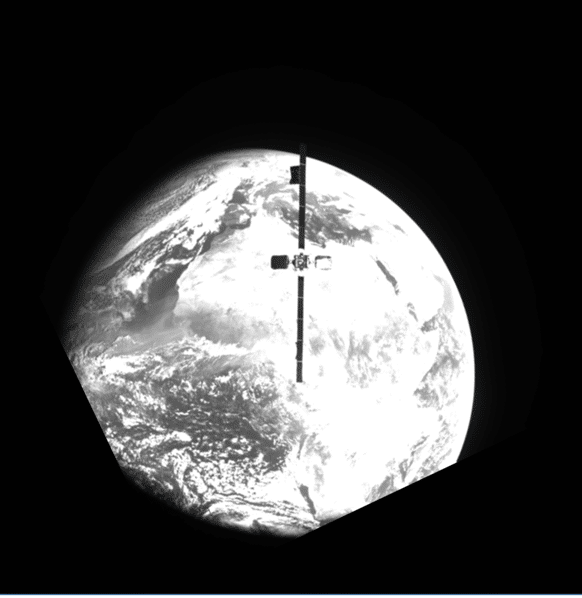
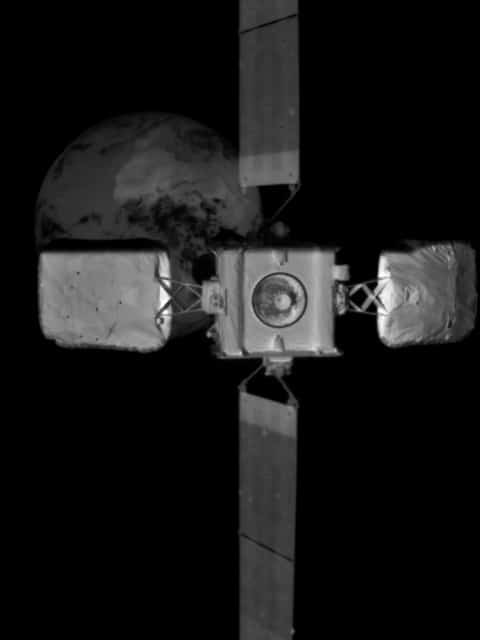
The view of THOR 10-02/IS-10-02 at its orbital position 1.0°W captured by the approaching MEV-2 (Mission Extension Vehicle). Image is courtesy of Northrop Grumman.
Featured image: The view of THOR 10-02/IS-10-02 at its orbital position at 1° West, captured by the approaching MEV-2 (Mission Extension Vehicle).  Image is courtesy of Northrop Grumman.

This represents the start of a new era for satellite communications, paving the way for a different approach to satellite servicing and life-extension possibilities.

The THOR 10-02 satellite, jointly owned with Intelsat (IS-10-02), was first launched in 2004 and remains in excellent health, continuing to carry thousands of vital communication links to vessels navigating across busy shipping lanes and operating in remote offshore fields, as well as delivering connectivity for broadcasting and land-based services in remote locations. The prospect of preserving the operation of these links made it an obvious choice for this pioneering technology, and the companies are the first commercial satellite operators to perform on-orbit servicing of an active satellite in geosynchronous orbit.

Morten Tengs, Telenor Satellite’s CEO, said: “This is a ground-breaking project and we are pleased to be a part of the success of this historic mission. Delivering exceptional satellite connectivity to our clients is our primary focus.”

Space Logistics (a subsidiary of Northrop Grumman) was contracted by our partner at 1° West, Intelsat, to deploy its Mission Extension Vehicle MEV-2 to prolong the operational life of THOR 10-02/ IS-10-02 as its on-board propellant was due to run out towards the end of 2021. The countdown started on August 15, 2020, when MEV-2 was launched from Kourou, French Guiana on board an Ariane 5 rocket.

Eight months after the launch, the docking procedure took place on 12 April, making history for satellite operations.

The MEV-2 satellite docked directly onto the communications satellite, effectively providing the space equivalent of a jetpack and so extending the operational life of THOR 10-02/IS-10-02. The MEV-2 has now taken over control of both the orbit and pointing of the satellite and will continue do so until the satellite is eventually retired in approximately five years’ time.

Back to all News

Telenor Satellite's THOR 10-02 makes satellite communications history 36 000 km above the equator.

An image of THOR 10-02 / IS-10-02 taken by MEV-2’s infrared wide field of view camera at 15m away. Image courtesy of Northrop Grumman.
Featured image: An image of THOR 10-02 / IS-10-02 taken by MEV-2’s infrared wide field of view camera at 15m away. Image courtesy Northrop Grumman.

Ground-breaking mission in the deepest of space.

Dockings between spacecraft take place on a routine basis, as part of ongoing operations at the international space station. Missions, bringing crew, supplies and fuel, occur regularly at 400 km above the surface of the Earth, where the space station orbits our planet every 93 minutes.

But on April 12, 2021 something truly pioneering took place even further out in space. In fact, almost one hundred times further, 36 000 km above the equator! Here, far above our planet, we made history as Northrop Grumman’s MEV-2 (Mission Extension Vehicle) and our THOR 10-02 satellite docked with each other for the first-ever on-orbit servicing of an active satellite.

Long live THOR 10-02!

THOR 10-02 satellite has been flying in space since 2004, providing vital communication links for broadcasting, maritime and land-based connectivity for parts of Europe and the Middle East. Although the satellite was in excellent health, it was beginning to run out of fuel. This is not unexpected, and before, this would have meant the end of life for a satellite. However, with the help of the latest revolutionary space technology, we can now make sure that our satellite lives on and serves our customers for another five years.

MEV-2 was launched in August of 2020 on board an Ariane 5 rocket from Kourou, French Guinea. Its sole mission was to fly to THOR 10-02, approach it carefully, centimetre-by-centimetre and grab hold of THOR 10-02 to extend its mission life. Simply put, it is an extraordinary achievement to approach and dock while travelling at 3 km/second at 36 000 km above the Earth!

Kudos to all our teammates at Telenor Satellite, partners in Intelsat who operate THOR 10-02 and Northrop Grumman who operate the MEV-2 for this remarkable achievement. Without this success, our THOR 10-02 would have left active service towards the end of 2021 due to running out of fuel. Instead, a new chapter was opened in the life of our satellite.

Arianespace’s fifth mission of 2020 used an Ariane 5 with increased payload capacity, resulting from the integration of a new vehicle equipment bay. Flight VA253. Galaxy 30, MEV-2 and BSAT-4b.

Arianespace’s fifth mission of 2020 used an Ariane 5 with increased payload capacity, resulting from the integration of a new vehicle equipment bay. Flight VA253. Galaxy 30, MEV-2 and BSAT-4b. Décollage champ large, le 15/08/2020. | Wide view lift-off. 08/15/2020. Image courtesy Arianespace.

So what’s so special about the GEO orbit?

This is where we find the geosynchronous satellites used for all kinds of communication, observation and navigation missions. As we all know, the earth revolves around its axis in 24 hours. What you perhaps didn’t know is that satellites in the geosynchronous orbit travel around their orbit in exactly the same time. This means that a satellite in the GEO orbit follows the rotation of the Earth, and the satellite, therefore, appears to stay fixed with respect to Earth.

This property is enormously important, since it allows for the installation of the small, inexpensive parabolic antennas that we are so used to for receiving satellite television. Hundreds of TV-channels are available to watch with no cables, only a small antenna dish on your wall. And for our maritime clients, this means robust connectivity for their business-critical operations at sea.

Together, no mission is impossible.

We are proud to be part of this revolutionary mission, making satellite communications history together with our talented and dedicated colleagues and trusted partners.

Intelsat, co-owner and operator of IS-10-02 /THOR 10-02.

Northrop Grumman, developer and operator of the MEV-2.

Back to all News

Telenor Satellite and Intelsat to add new 4K/UHD (Ultra High Definition) channels to key regions across Europe.

4K/UHD broadcast services distribution
Telenor Satellite introduces 4K/UHD channels to the Nordics and Central Eastern Europe

Telenor Satellite and Intelsat are extending their longstanding partnership at 1° West to expand 4K/UHD (Ultra High Definition) channel distribution to Nordic and Central Eastern European (CEE) countries, and introducing it directly into the homes of nearly 18 million Pay TV households in the region.

The Telenor Satellite and Intelsat 1° West media distribution solution is an ideal platform for 4K/UHD, which offers the best quality picture for viewers. The Telenor Satellite-Intelsat partnership at 1° West is already helping broadcasters in the region reach a much larger audience, across a broader geographic area, when broadcasting 4K channels.

Now, the companies are introducing new 4K/UHD channel distribution. First channels to be offered include NASA TV and WOW 4K, with additional channels coming soon. The new 4K channels will be broadcast to CEE and Nordic region viewers on Telenor Satellite’s THOR 7, and Intelsat will do the same for CEE viewers using Intelsat 10-02.

“We are delighted to welcome broadcast channels such as Wow 4K and NASA 4K to be distributed via our 1° West satellite fleet, with 4K content enhancing the viewing experience even more,” said Ole Ledang, Director of Broadcasting Division at Telenor Satellite.

“We know that viewers’ expectations are growing when it comes to user experience. They are looking for a high-quality, high-resolution image, and they also want access to more diversified content. Working with Telenor Satellite, we are making it possible for broadcasters to meet their viewers’ needs in the Nordics, the CEE regions and neighbourhoods that we are already addressing through 1° West,” said Olivier Herson, Managing Sales Director at Intelsat.